← Back to the Laval map
Area · Laval-des-Rapides, City of Laval

Laval-des-Rapides

Laval's only real downtown, the metro since 2007, a train that leaves right under the station, and the river that gave the neighbourhood its name. Here's my top 10, neighbour's version, not brochure version.

Let's talk about this area

Laval-des-Rapides sits in the south central part of Île Jésus, between the rivière des Prairies to the south and Boulevard des Laurentides to the northeast, with Chomedey on one side and the Ahuntsic-Cartierville borough right across the water. It was its own municipality as early as 1912, became a city in 1962, and then came the big 1965 merger that created the City of Laval. With close to 37,000 residents, it's now the third-largest neighbourhood in Laval.

It's also the one that's changed the most. Since the orange line crossed the river, a whole downtown has grown up around the Montmorency terminus, while the old numbered avenues to the south have kept their bungalows, duplexes, and big trees. When a buyer tells me they want Laval without giving up the metro, this is where the conversation starts.

I put this top 10 together for a simple reason: when you buy or sell, you're not just shopping for a property, you're shopping for a neighbourhood life. Every point comes with an opening for a conversation. Use it.

Maxime Laforest, residential and commercial real estate broker · Équipe Loiselle, RE/MAX Dynamique

The area's top 10

What makes Laval-des-Rapides tick.

Ten reasons buyers end up looking at the south end of Laval, and why the ones who settle in never leave.

01 Downtown Laval seen from the Université de Montréal campus, with Place Bell
Downtown

The only real downtown in Laval

Laval was born from the merger of fourteen former municipalities, and only one of its neighbourhoods ended up looking like a downtown: this one. Everything revolves around the Montmorency terminus and Boulevard de l'Avenir, where the CEGEP, the university campus, the arena, offices, and residential towers all went up over about twenty years. The cranes have barely stopped since the metro arrived.

Ask me about it: ask me how far the walking radius from Montmorency really goes. The answer often surprises buyers coming from the island.
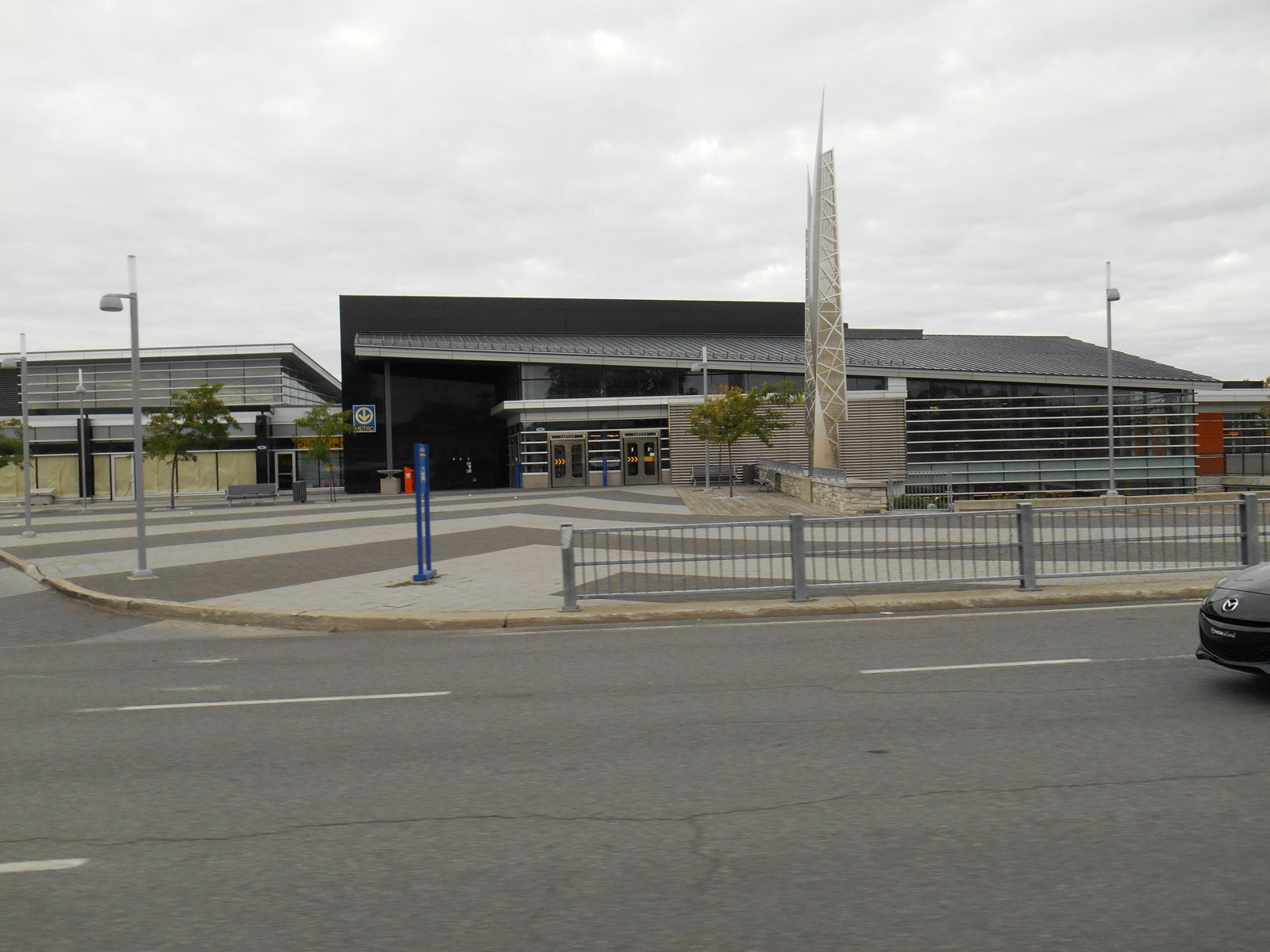
02 The entrance building of the Cartier metro station, in Laval
Transit

Three metro stations since 2007

On April 28, 2007, the orange line crossed the rivière des Prairies and the area inherited three stations at once: Cartier, De la Concorde, and the Montmorency terminus. It's the only part of Laval directly connected to the metro. STL bus terminals are attached to the Cartier and Montmorency stations, which brings routes here from nearly every other part of the city.

Ask me about it: ask me which streets are close enough to a station to skip a second car. It's a calculation we work through together before even booking a visit.
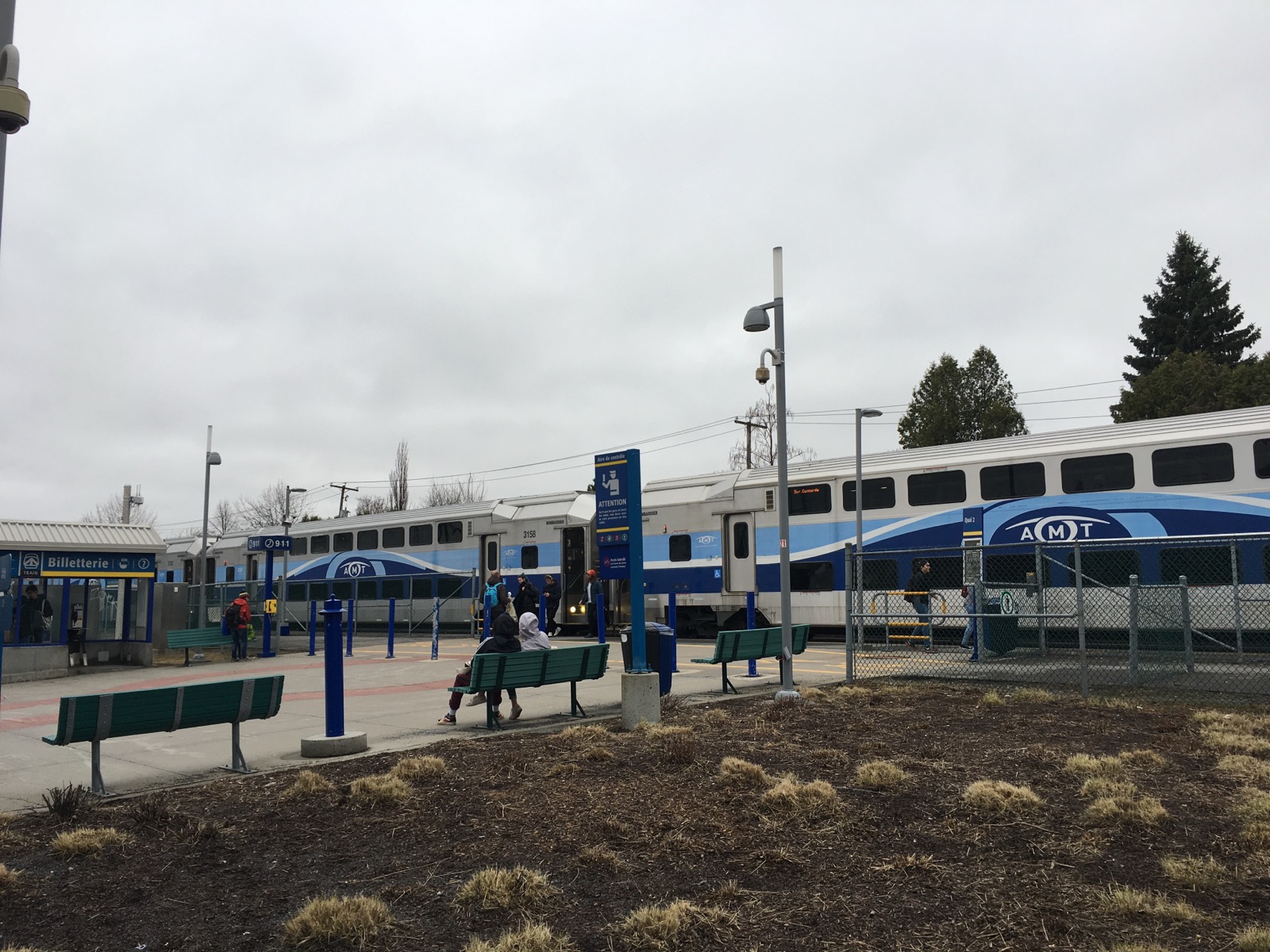
03 A Saint-Jérôme line train at the platform at De la Concorde station, in Laval-des-Rapides
The train

A commuter train right under the metro

At De la Concorde, you step off the metro and onto exo's Saint-Jérôme line train, which heads down to Lucien-L'Allier station in downtown Montreal. It's the only connection point between the metro and a commuter train anywhere on Laval's network, with a park-and-ride to go with it. Outside, the artwork Nos allers-retours by Yves Gendreau plays on the colours of the metro lines.

Ask me about it: ask me whether the train or the metro fits your schedule better. Depending on the time and your destination, it's not always the same winner.
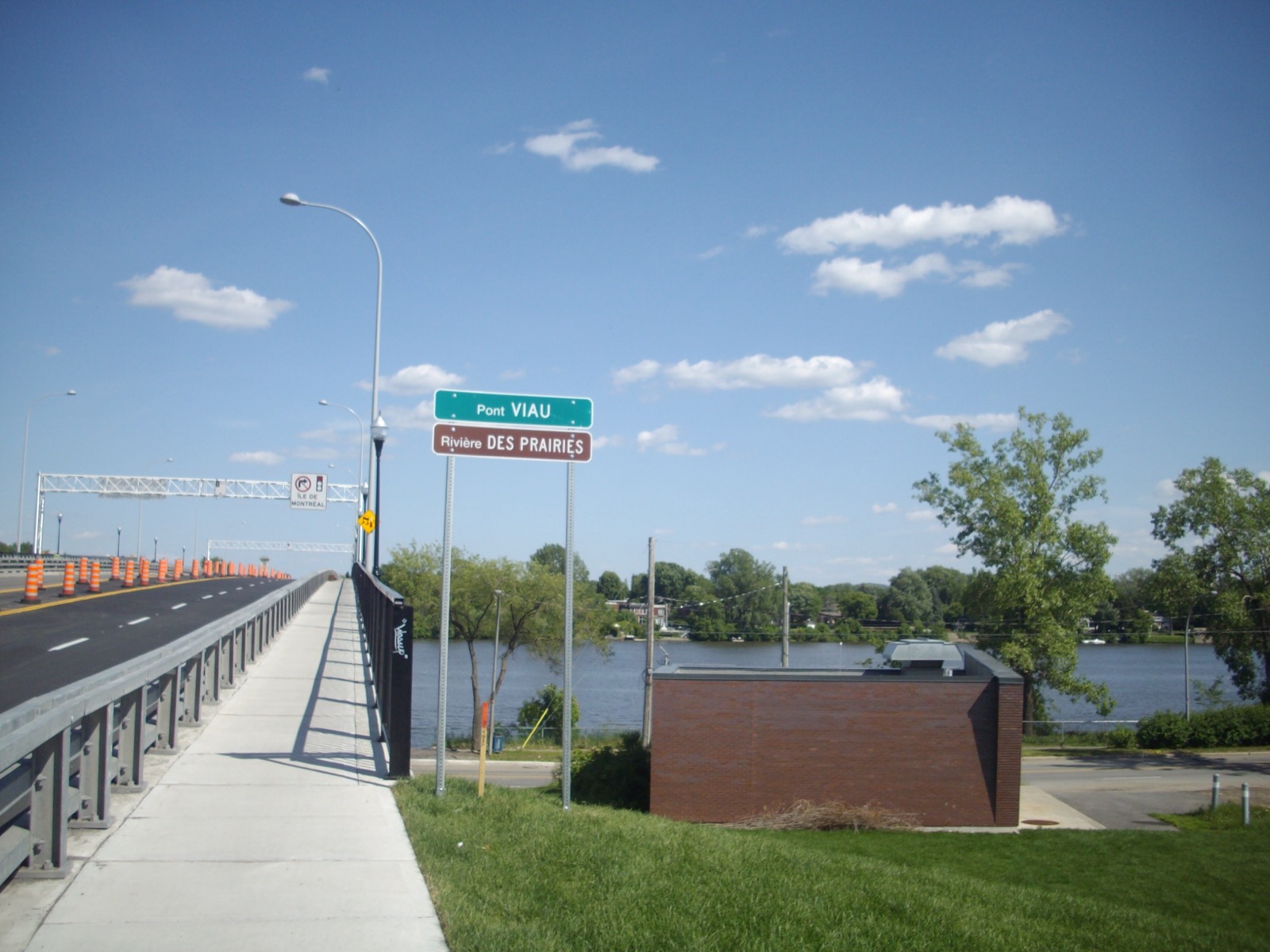
04 The Viau bridge and its sidewalk over the rivière des Prairies, Laval side
Access

The Viau bridge and the main routes

The Viau bridge extends Boulevard des Laurentides over the river and comes out in Ahuntsic, sidewalk included for anyone crossing on foot or by bike. Highway 15 runs toward the Laurentians, Highway 440 closes off the neighbourhood's north side, and the Papineau-Leblanc bridge on Highway 19 is a few minutes away to the east. On the local level, it's boulevards Cartier, de la Concorde, Saint-Martin, and Lévesque that do the heavy lifting.

Ask me about it: ask me how long it really takes to get downtown by car at rush hour. I'll give you the straight answer, not the optimistic one.
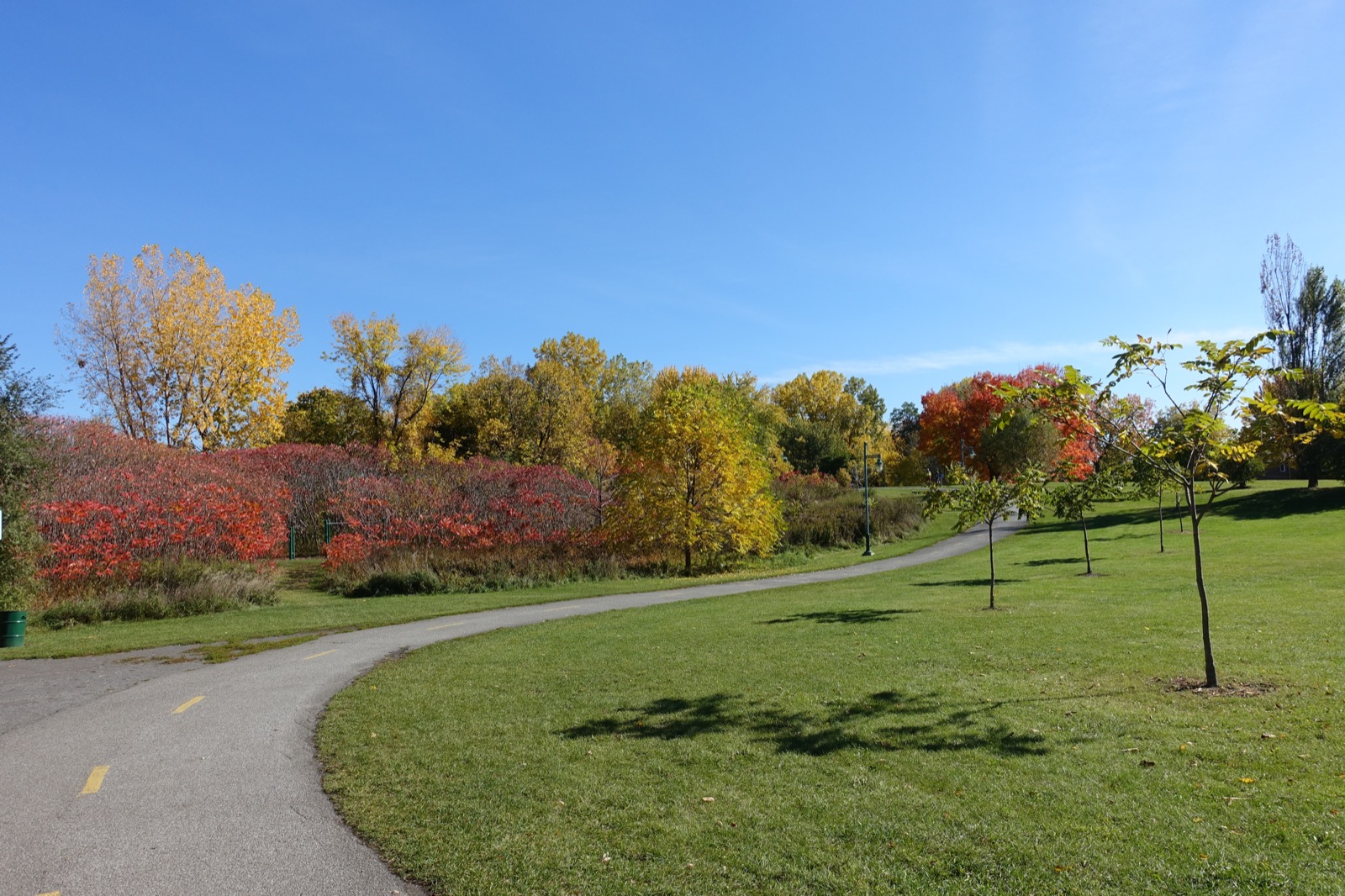
05 Trail and fall colours at Parc Bernard-Landry, formerly Parc des Prairies, in Laval-des-Rapides
Nature

Parc Bernard-Landry, thirty hectares in the middle of the city

Long known as Parc des Prairies, it was renamed in 2019 in honour of Bernard Landry, a former premier of Quebec, who had been the MNA for Laval-des-Rapides from 1981 to 1985. It has thirty hectares of woods, meadows, and trails, an ecology interpretation trail with about thirty panels, and the Route verte running through it. It's the kind of space you wouldn't expect to find a few minutes from a metro station.

Ask me about it: ask me which streets back directly onto the park or one of its entrances. Those addresses don't stay on the market long.
06
Waterfront

The river that gave the neighbourhood its name

It's easy to forget because the name has become so ordinary, but Laval-des-Rapides owes its name to the rapids on the rivière des Prairies, which runs along its entire south side. Boulevard Lévesque follows it from one end of the area to the other, and public shorelines like Parc Gagné give access to the water without needing to own waterfront land. It's where the locals go for an end-of-day walk, and it's where the fall photo gets taken.

Ask me about it: ask me what an address on Boulevard Lévesque actually changes compared to the street right behind it. There's a case for both, and I'll lay them out.
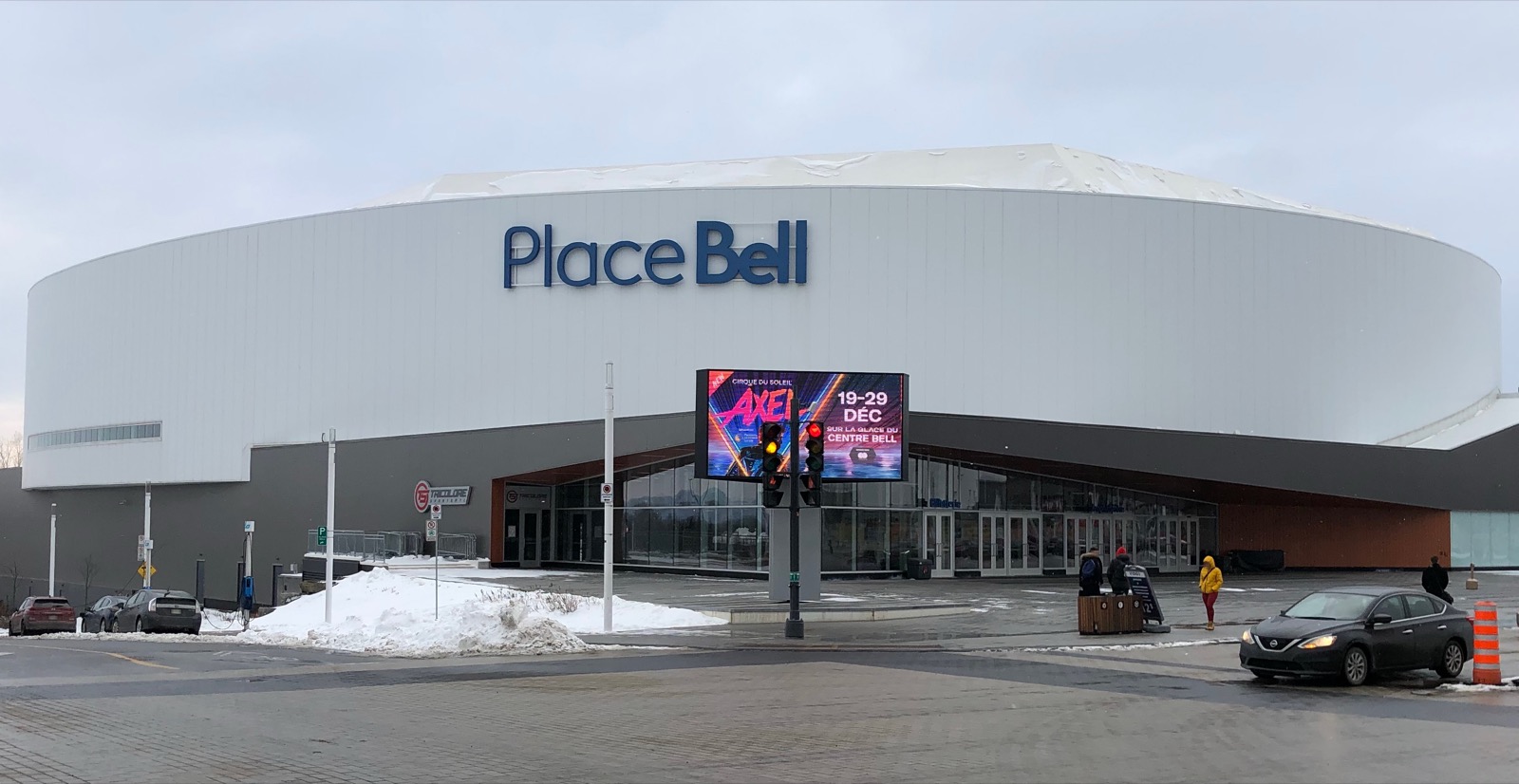
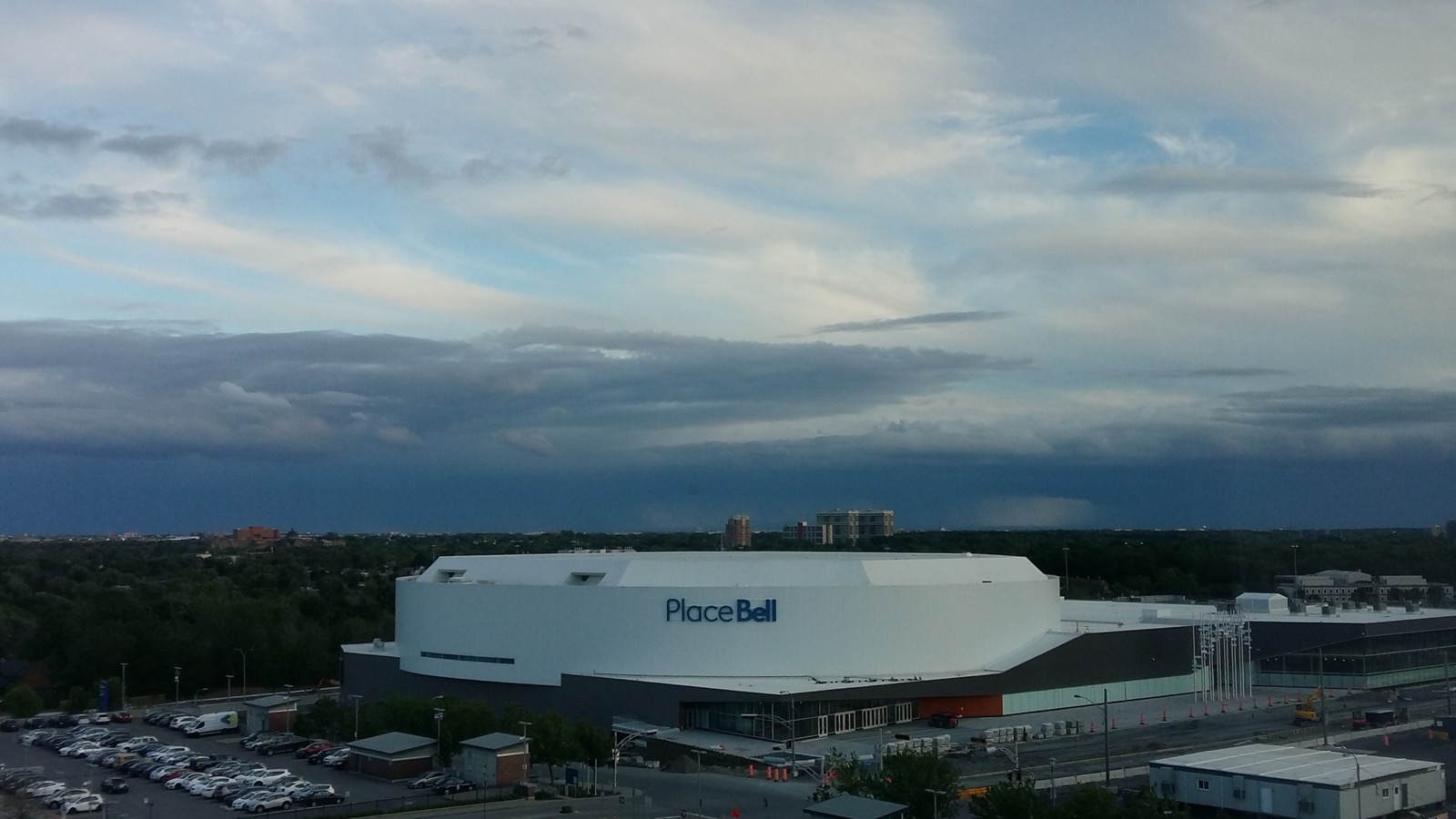
07 The facade of Place Bell, in downtown Laval
Sports and shows

Place Bell and the Rocket

Opened in the fall of 2017 after a 200-million-dollar build, Place Bell has three rinks, including an NHL-sized one with about 10,000 seats. The Laval Rocket plays its American Hockey League games there and Montreal's Victoire has also made it home. Between shows, skating competitions, and minor hockey on the other two rinks, the arena runs pretty much every day of the year.

Ask me about it: ask me what kind of traffic Place Bell brings to the area on game nights. It's worth planning for when you're choosing a street.
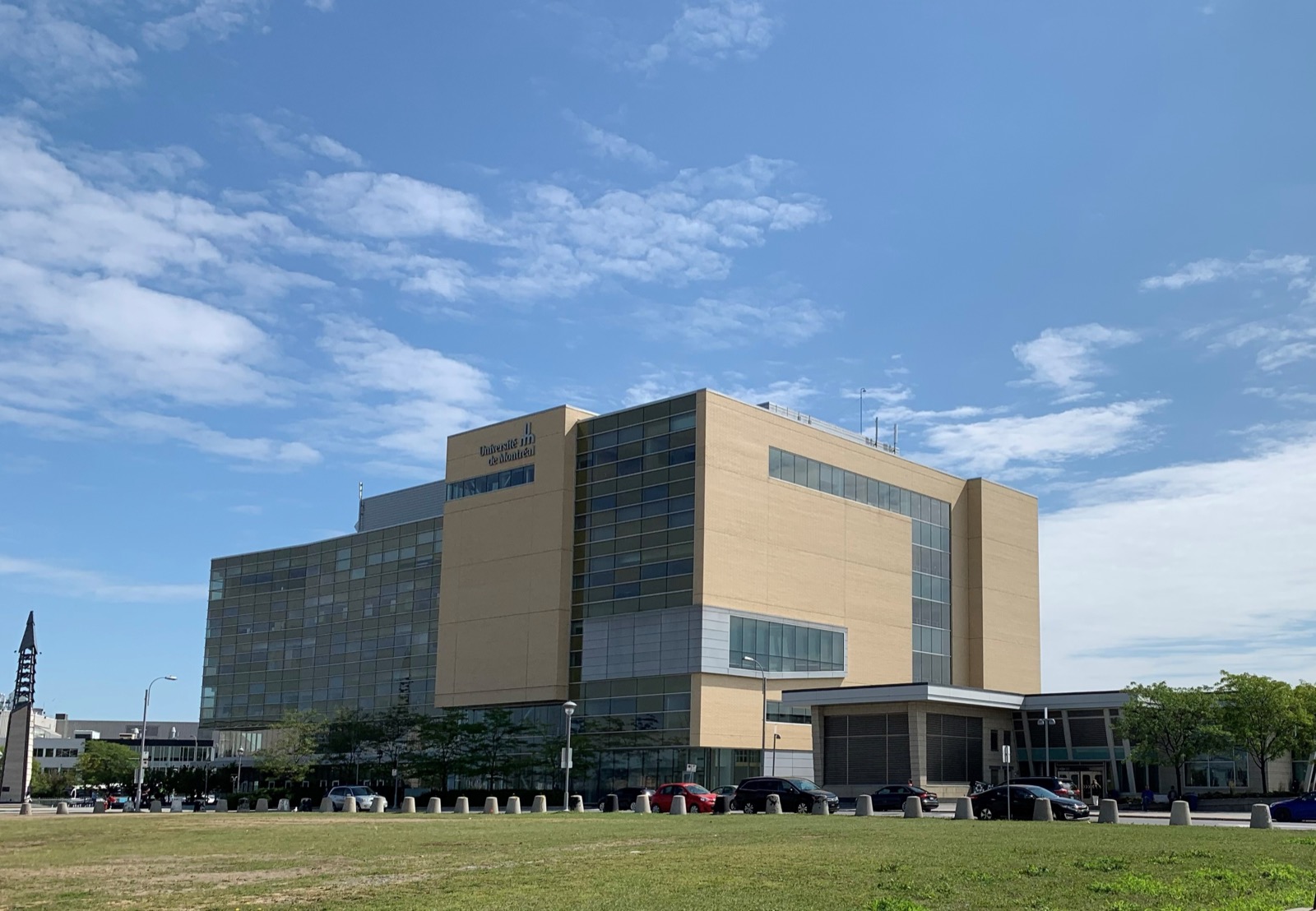
08 The Université de Montréal's Laval campus, near the Montmorency metro station
Learning

A study hub rare in the suburbs

Collège Montmorency, at 475 Boulevard de l'Avenir, is the largest French-language CEGEP in Quebec, with more than ten thousand students. Right next door, the Université de Montréal's Laval campus occupies a building connected to the metro station, and INRS's Armand-Frappier centre does health research on Boulevard des Prairies. Few suburban neighbourhoods in Quebec pack this many postsecondary institutions onto so few streets.

Ask me about it: ask me what this student population does to rental demand in the area. It's a figure that carries real weight for an investor.
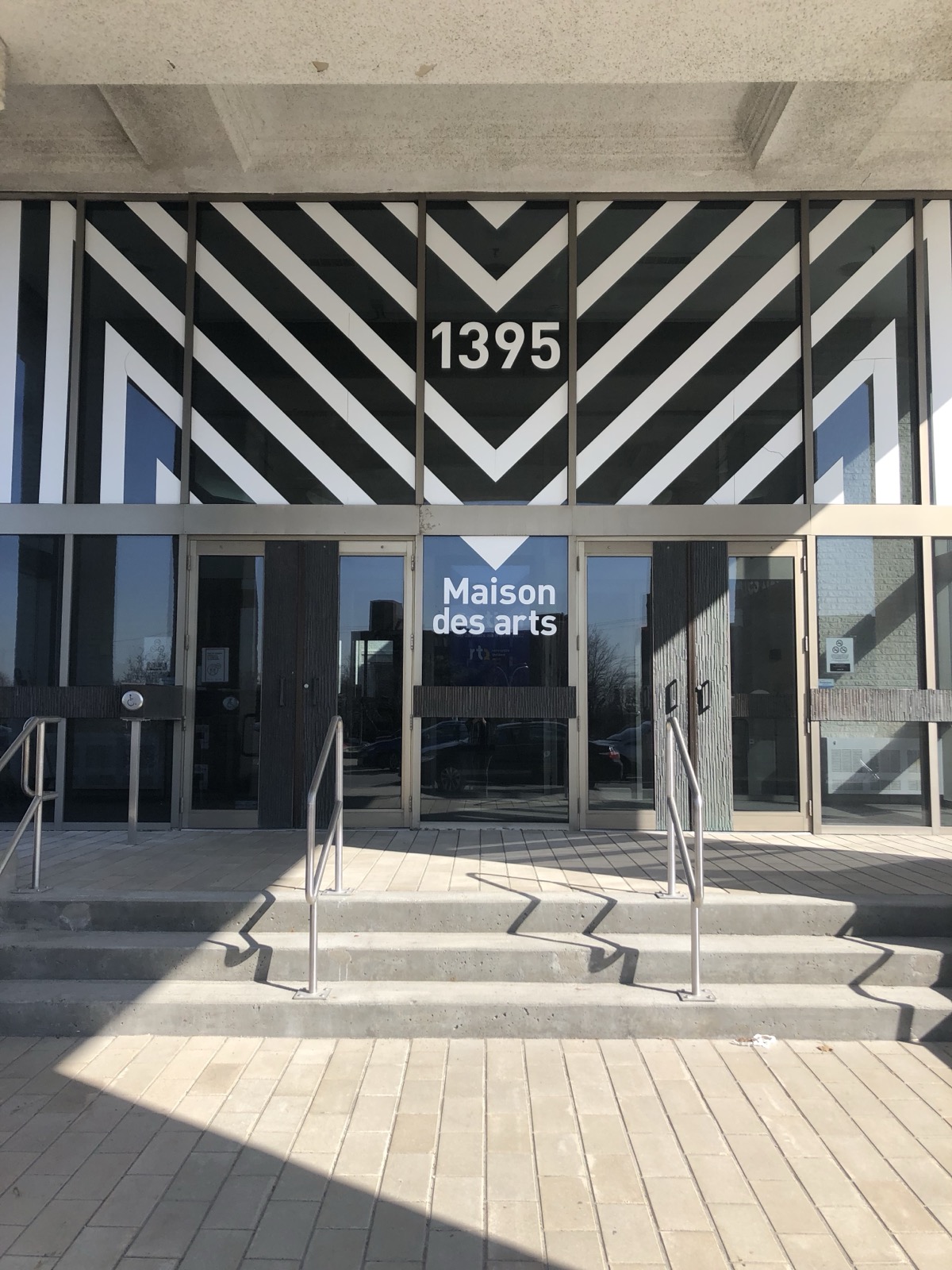
09 La Maison des arts de Laval, on Boulevard de la Concorde
Culture

La Maison des arts and the André-Mathieu hall

La Maison des arts de Laval, on Boulevard de la Concorde, is the city's main cultural venue: a performance hall, an exhibition gallery, and a visual arts program. Not far away, the André-Mathieu hall, attached to Collège Montmorency, hosts big touring shows and TV recordings. Add in the Émile-Nelligan library and you have enough to fill a whole season without ever crossing the bridge.

Ask me about it: ask me what's on at these venues this season. It's often what ends up selling a neighbourhood to buyers who go out a lot.
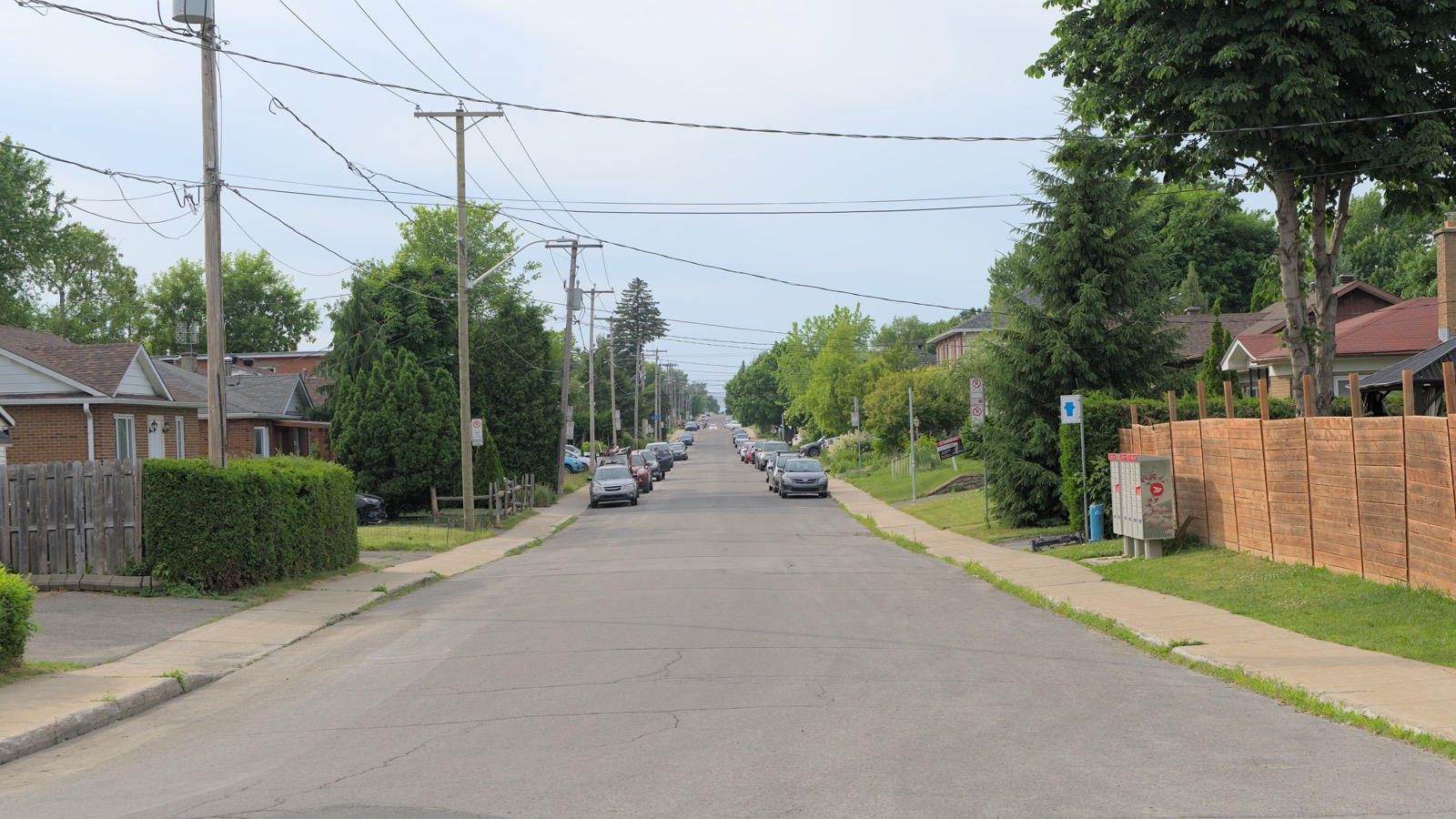
10 Avenue Quintal, in the residential part of Laval-des-Rapides
The old town

Numbered avenues and a history all its own

The area's population jumped by nearly 385 percent between 1951 and 1961, and you can still read it in the landscape: a grid of numbered streets and avenues, postwar bungalows and duplexes, trees that have had time to grow. The Vanier cross, commissioned in 1902 by parish priest Élias Vanier, still holds its street corner. On the school side, the elementary schools De l'Arc-en-ciel, Léon-Guilbault, Marcel-Vaillancourt, and Sainte-Marguerite share the territory, with the high schools de la Mosaïque and Mont-de-La Salle for the next step.

Ask me about it: ask me how to read the age of a street in Laval-des-Rapides. Between two neighbouring avenues, construction dates can be twenty years apart, and it shows on the listing.
Let's talk

Thinking about buying or selling in Laval-des-Rapides? Let's start with a conversation.

A free evaluation of your property, a picture of the local market, or simply answers to your questions. No strings attached, and a straight answer.

Start my real estate project

Photo credits