← Back to the Laval map
Area · Laval-Ouest, Laval

Laval-Ouest

A summer village from 1930 turned year-round neighbourhood, numbered avenues running down to the rivière des Mille Îles, and Saint-Eustache right across the water. Here's my top 10, neighbour's version, not brochure version.

Let's talk about this area

Laval-Ouest occupies the northwest tip of Île Jésus, between Fabreville, Sainte-Dorothée, Laval-sur-le-Lac, and the rivière des Mille Îles. It's one of the areas of Laval where you still feel most like you're right on the water: the neighbourhood started as a resort area, and a good number of the houses on the north side of Boulevard Sainte-Rose are former cottages that have been expanded and insulated over the decades. It had 11,369 residents at the 2011 census.

I work with buyers looking for a lot, river access, and a quieter pace without leaving Laval, and sellers whose street has changed since the REM arrived in the west end of the island. I put this top 10 together for a simple reason: when you buy or sell, you're not just shopping for a property, you're shopping for a neighbourhood life. Every point comes with an opening for a conversation. Use it.

Maxime Laforest, residential and commercial real estate broker · Équipe Loiselle, RE/MAX Dynamique

The area's top 10

What makes Laval-Ouest tick.

Ten reasons buyers cross the island to get here, and why the ones who settle in never leave.

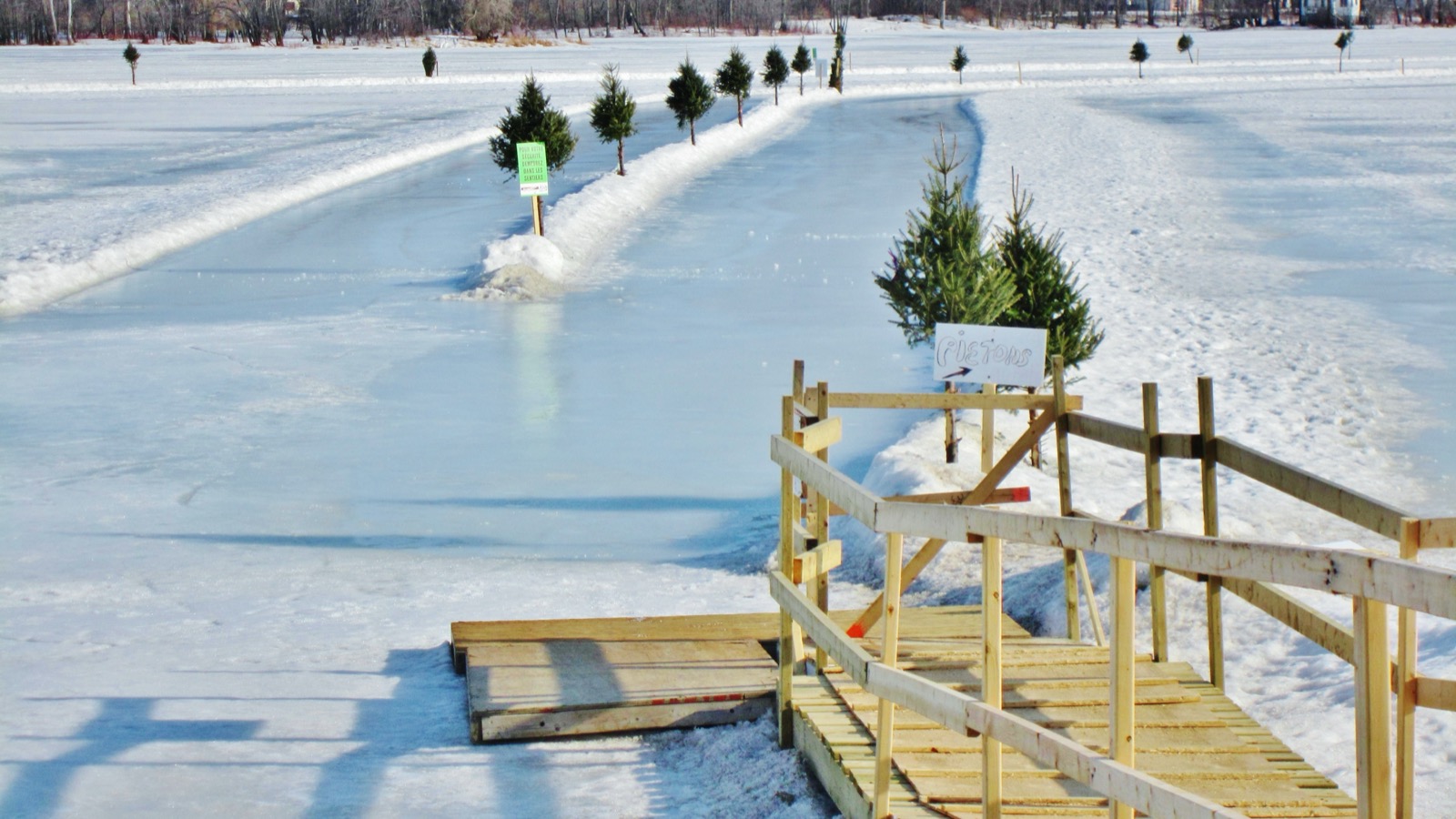
01 Cleared skating rink on the ice of the rivière des Mille Îles, with a wooden walkway leading down to it
The river

The rivière des Mille Îles right out front

The neighbourhood's entire northwest border is water. Across the way, you can see Saint-Eustache and Deux-Montagnes, close enough to make out the church steeple. In summer, the river is navigable by canoe and kayak, and in winter it freezes solid enough for skating rinks and ice fishing. Parc de la Rivière-des-Mille-Îles, in Sainte-Rose, is the organization that showcases this waterway from one end to the other.

Ask me about it: ask me the difference between an address with water access, one with a view, and one that's simply nearby. The three don't sell the same way at all.
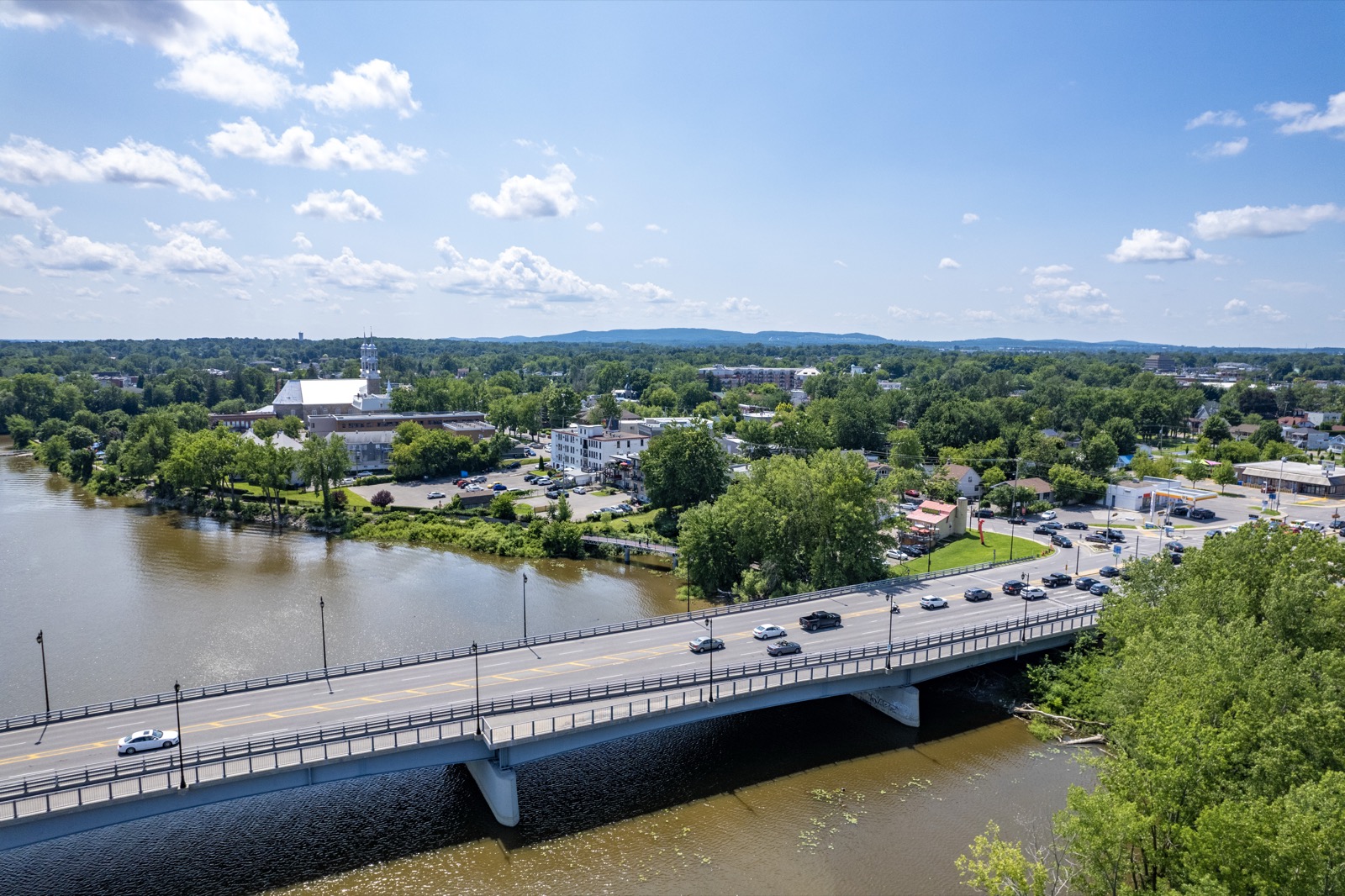
02 The Arthur-Sauvé bridge over the rivière des Mille Îles, with old Saint-Eustache and the Laurentians on the horizon
Access

The Arthur-Sauvé bridge, the gateway north

It's the westernmost road bridge between Île Jésus and the north shore, and it carries Route 148 all the way to Saint-Eustache. An earlier toll bridge, the Bellefeuille bridge, already crossed here in 1849. The current version was fully rebuilt between June 2008 and June 2010: 480 metres, four lanes, and about 23,700 vehicles a day. For a lot of people around here, the grocery store and the movie theatre are on the other side.

Ask me about it: ask me how this bridge changes the math when you work in the Laurentians instead of downtown. It shifts the whole question.
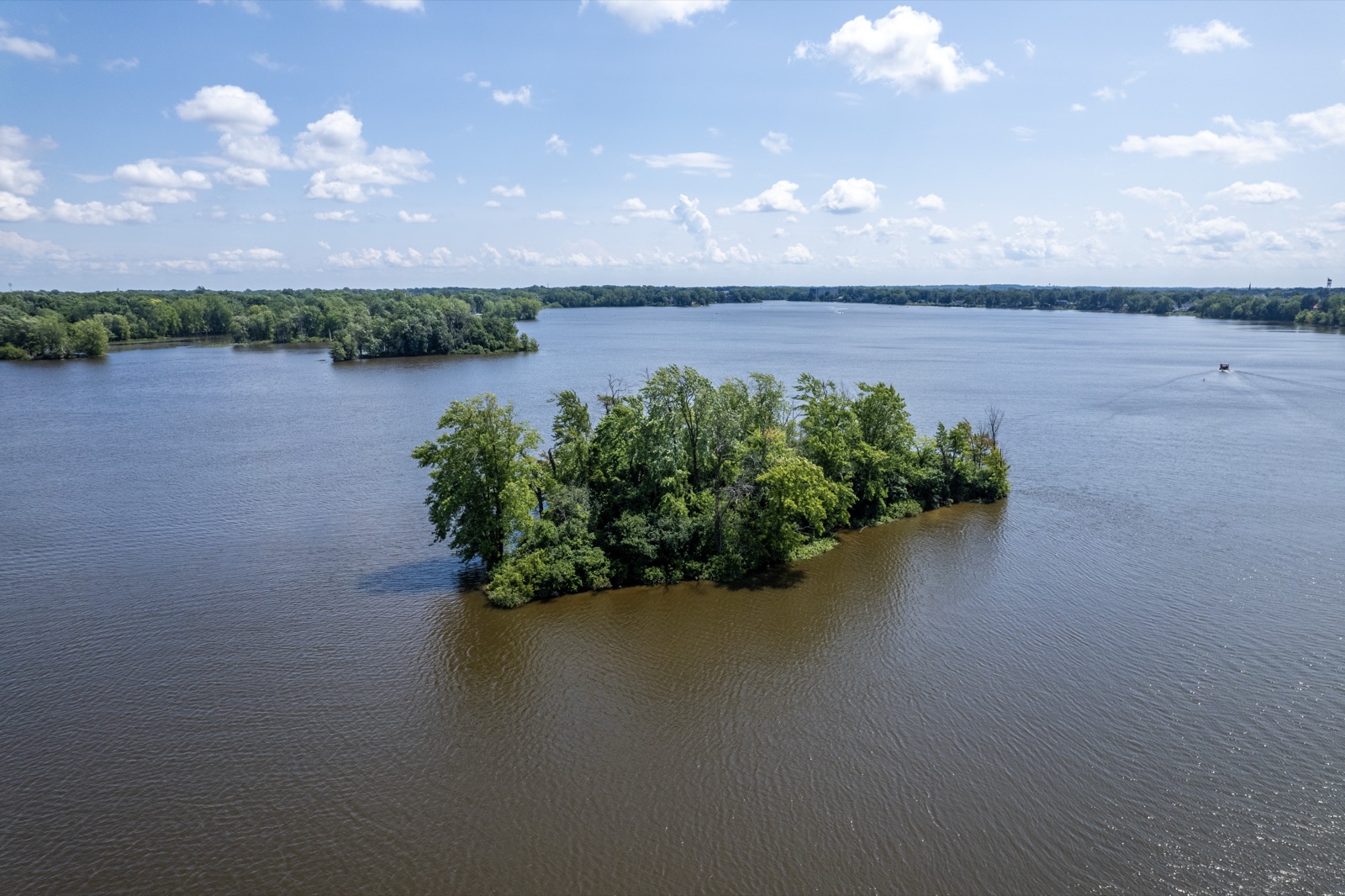
03 A wooded island in the middle of the rivière des Mille Îles, seen from above
Outdoors

The Grand-Moulin dam, a bridge for cyclists

At the western tip of the neighbourhood, the Grand-Moulin dam marks the boundary between Lac des Deux Montagnes and the rivière des Mille Îles. Built as part of the Archipel project, it doesn't generate electricity: its gates stay open year-round and only serve to hold back the spring floods. On the structure, a bike path and a wide pedestrian walkway let you walk all the way to Deux-Montagnes while looking out over the islands of the archipelago.

Ask me about it: ask me which streets in the area give access to this bike link within a few minutes. It's a point I bring up often on visits.
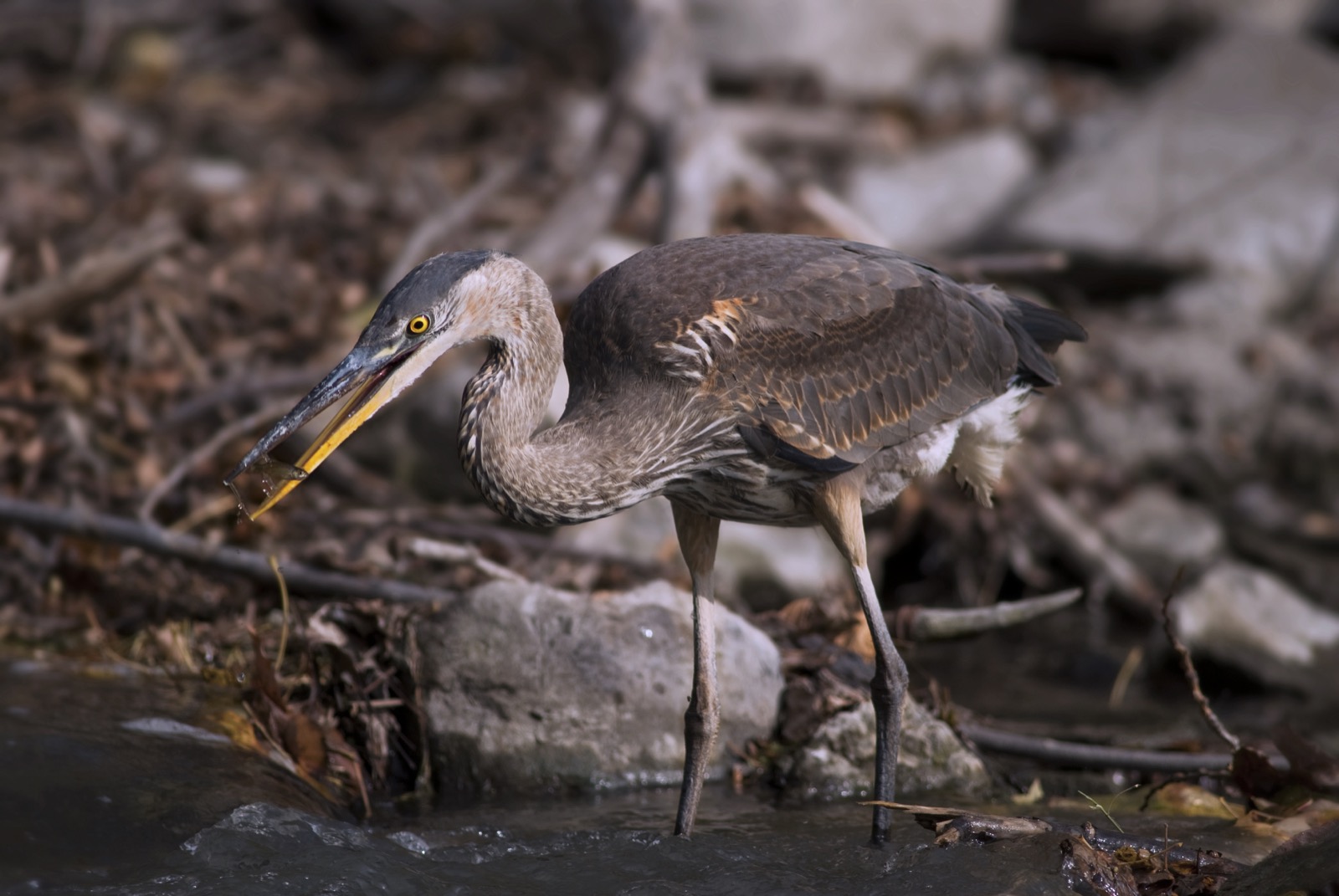
04 A great blue heron fishing on the shore of the rivière des Mille Îles
Nature

A wildlife refuge right at the edge of the property

The Rivière-des-Mille-Îles wildlife refuge was recognized by the Quebec government in 1998 and is managed by Éco-Nature. In 2022, the City of Laval added 432 lots to it, 568 hectares in total, making it the largest urban wildlife refuge in Quebec. It protects the northern map turtle, the least bittern, the wood duck, and a long list of vulnerable species. In practical terms, that means herons and turtles just minutes from the boulevard.

Ask me about it: ask me what having a protected habitat nearby can mean for a waterfront extension project. Better to know before the offer than during the inspection.
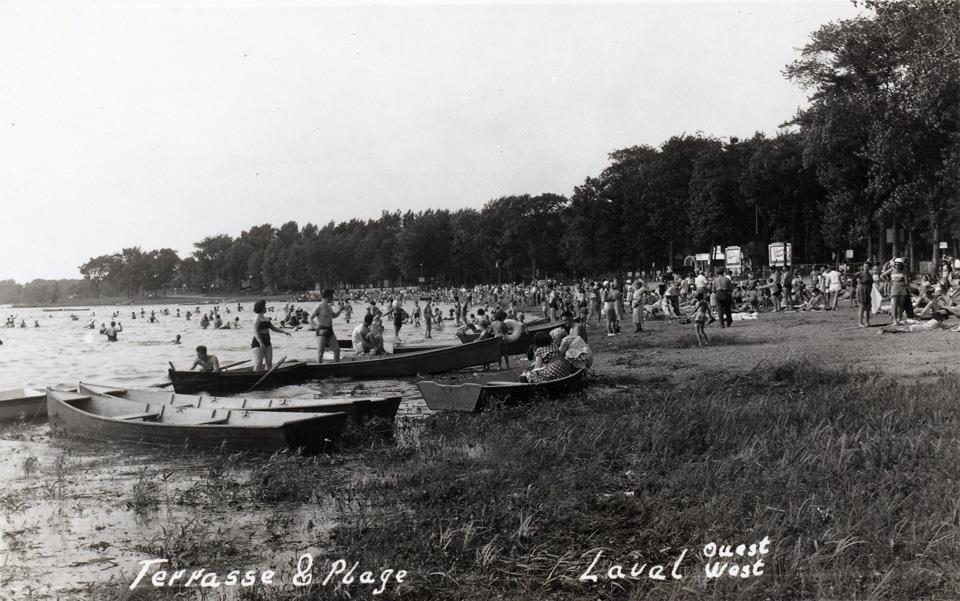
05 A 1940s postcard showing the terrace and beach at Plage Laval, packed with swimmers and rowboats
History

Plage Laval, the summer village

In April 1926, the American real estate firm of the Smadbeck brothers, Warren and Arthur, bought farmland west of Sainte-Rose to resell as resort lots, the same way they'd done in the New York area. The village of Plage Laval was incorporated in 1930 with 281 permanent residents, but in summer the population climbed to nearly 5,000 people. The municipality became the town of Laval-Ouest in 1951, annexed part of Sainte-Dorothée in 1962, and was then merged into Laval in 1965.

Ask me about it: ask me how to spot a former summer cottage behind a renovated facade. There are three or four telltale signs.
06
The housing stock

Cottages turned year-round homes

The resort past still shows in the housing stock, especially on the river side of Boulevard Sainte-Rose, where a lot of former cottages have been converted into permanent residences. A large part of the area was originally flood-prone, until the dam built upstream in 1985 came along to regulate the spring floods. Another local quirk: no golf course within Laval-Ouest itself, but the neighbourhood is ringed by Laval-sur-le-Lac (1917), Islesmere (1919), Cardinal (1955), and U.F.O. in Fabreville.

Ask me about it: ask me what checks I always run on a former-cottage property, on the foundation side as much as the flood-zone side.
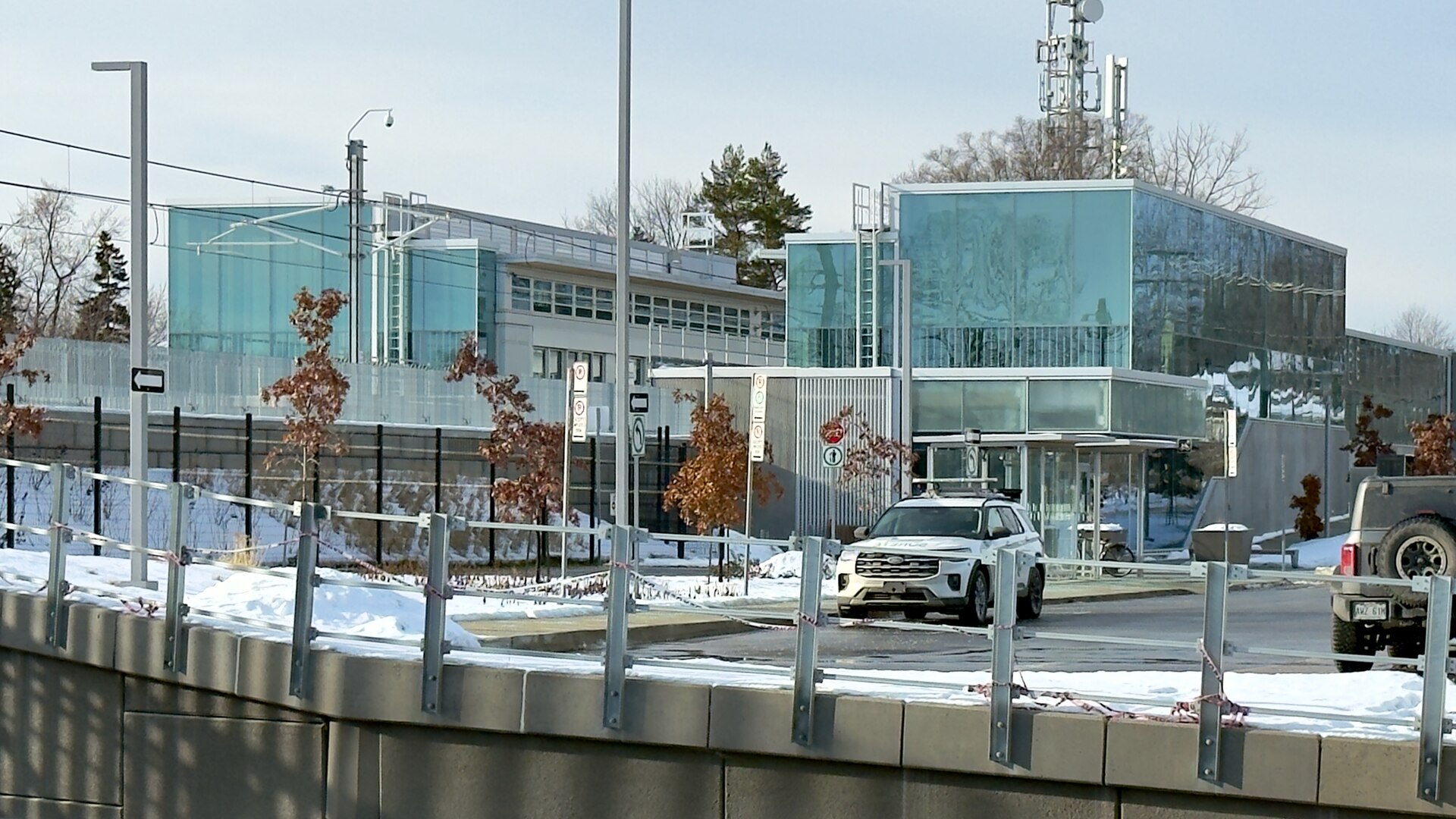
07 The REM's Sainte-Dorothée station, the closest one to Laval-Ouest, on a winter morning
Transit

The REM at Sainte-Dorothée and three bus lines

The REM's Deux-Montagnes branch has been running since November 17, 2025, and the station closest to the neighbourhood is Sainte-Dorothée, to the east. On the bus side, the Société de transport de Laval runs the 46 to Montmorency metro, the 55 to Henri-Bourassa metro, and the 255 to Bois-Franc station, with a taxibus on Chemin Saint-Antoine. By car, Boulevard Sainte-Rose leads to exit 17 on Highway 13, which then connects to Highway 440 heading east and Highway 640 heading north.

Ask me about it: ask me how long it really takes from the neighbourhood to the REM, bus and parking included. The honest number isn't the one in the brochures.
08
The streets

Numbered avenues and a neighbourhood of writers

In old Laval-Ouest, the streets are numbered avenues running down from Boulevard Sainte-Rose toward the river. The village's first school opened in 1938 at the corner of Boulevard Sainte-Rose and 49th Avenue, and Raymond and Christ-Roi schools were launched in 1946 near what's now 29th Avenue. Further south, a whole section carries writers' names: Baudelaire, Aragon, Albert-Camus, Jean-Cocteau, Prévert, de Vigny, Fernando-Pessoa. And Rue Riviera is still a reminder of the vacationer era.

Ask me about it: ask me what sets the upper avenues apart from the ones that touch the water. It has nothing to do with construction year or lot size.
09
Heritage

Saint-Théophile, Pellan, and a 1928 organ

The parish of Saint-Théophile was founded in 1946 by Bishop Joseph Charbonneau. The second church, built in 1964, followed plans by architects Jacques Vincent and Jean Damphousse and used stone quarried from the very rock it stands on. Its stained-glass windows were made around 1964 based on designs by Alfred Pellan, and a 1928 Casavant organ was reinstalled there in the mid-1970s. Another piece of history: the Beth Abraham synagogue, founded in 1940, the oldest on Île Jésus, which served Jewish summer residents until the mid-1970s.

Ask me about it: ask me why I always tell buyers from outside the area this kind of story. A neighbourhood you understand is a neighbourhood you buy into faster.
10
Family life

An arena named after an NHL player

The neighbourhood arena has been called Hartland-Monahan since 2014, after a letter-writing campaign by residents: Monahan, born in Montreal in 1951 and Bernie Geoffrion's son-in-law, played 334 NHL games. Next door, Parc Laval-Ouest is used for baseball, soccer, football, and outdoor skating in winter, and there's the Raymond pool as well as an outdoor pool. Fleur-de-Vie and Raymond elementary schools fall under the Centre de services scolaire de Laval, and the Service des loisirs de Laval-Ouest, a community organization, has been running local activities since April 1971.

Ask me about it: ask me which parts of the neighbourhood young families are looking at first right now, and why walking distance to school changes everything.
Let's talk

Thinking about buying or selling in Laval-Ouest? Let's start with a conversation.

A free evaluation of your property, a picture of the local market, or simply answers to your questions. No strings attached, and a straight answer.

Start my real estate project

Photo credits