← Back to the Laval map
Area · Sainte-Rose, City of Laval

Sainte-Rose

An old village with its church from 1856, the rivière des Mille Îles at the end of the street, and neighbourhoods where the streets are named after birds. Here's my top 10, the neighbour's version, not the brochure's.

Let's talk about this area

Sainte-Rose occupies the north end of Laval, where Île Jésus ends at the rivière des Mille Îles. It's one of the rare corners of the north shore that has kept a real village core: a stone church, a rectory, 19th century houses along boulevard Sainte-Rose, and five minutes away, neighbourhoods of bungalows and suburban houses built in waves since the 1960s. It's Laval's fourth most populous neighbourhood, after Chomedey, Fabreville, and Laval-des-Rapides.

I work here with families coming from the island who want more land without moving away, and with village owners who want to sell to people capable of appreciating what they've built. I put together this top 10 for a simple reason: when you buy or sell, you're not just shopping for a property, you're shopping for a neighbourhood life. Each point comes with an opening for a conversation. Use it.

Maxime Laforest, residential and commercial real estate broker · Équipe Loiselle, RE/MAX Dynamique

The area's top 10

What makes the heart of Sainte-Rose beat.

Ten reasons buyers fall in love with the area, and why the people who are here don't leave.

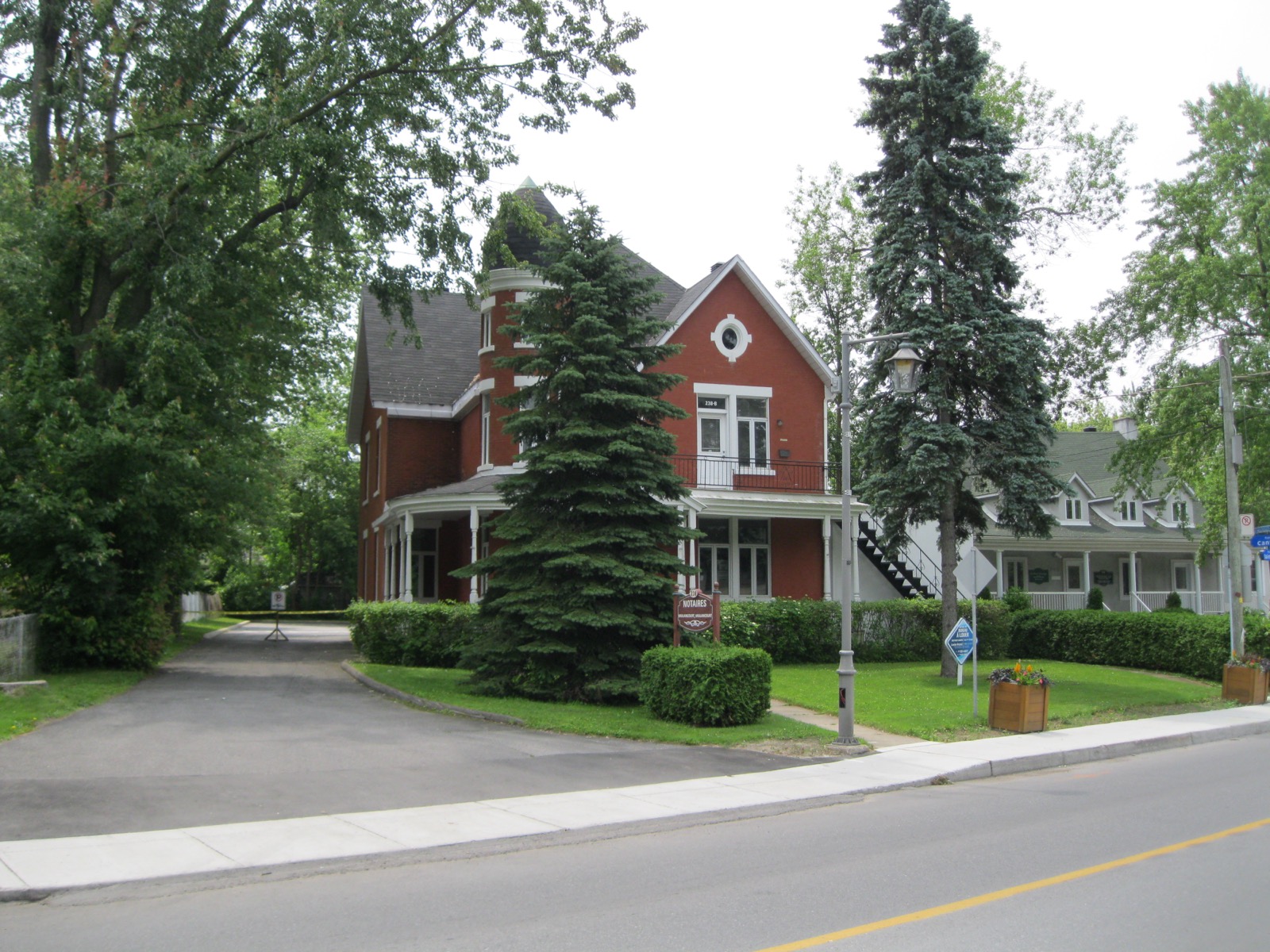
01 The former Augustine Labelle residence, at 238 boulevard Sainte-Rose, in Vieux-Sainte-Rose, Laval
The village

Vieux-Sainte-Rose, a real village core

The parish was born in 1740, when intendant Gilles Hocquart decreed its establishment: it's the second on Île Jésus, after Saint-François-de-Sales. The rectory was built as early as 1741 and the first church, made of cedar, in 1746. The village broke off in 1858, became a town in 1918, a city in 1964, then joined Laval at the 1965 merger. A rare thing for a Quebec village: development didn't happen around the church, but around two hubs, one near rue des Patriotes, the other where boulevards Sainte-Rose and Curé-Labelle meet, because of the two old bridges from back then, the Porteous to the east and the Plessis-Bélair to the west.

Ask me about it: ask me which streets in the old village really keep that atmosphere. It's not the same everywhere on boulevard Sainte-Rose.
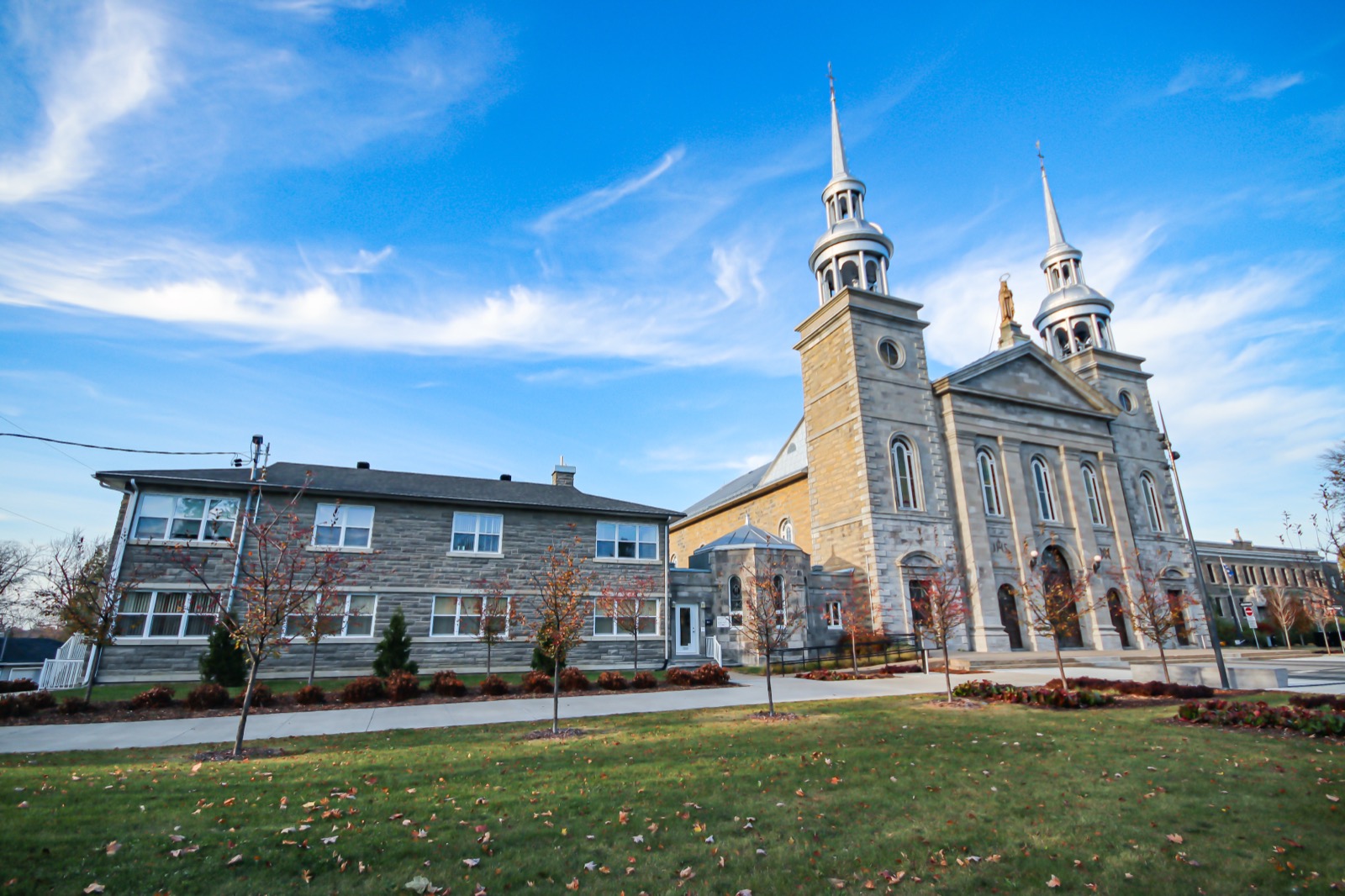
02 The rectory of the Sainte-Rose-de-Lima church, boulevard Sainte-Rose in Laval
Heritage

The Sainte-Rose-de-Lima church

At 219 boulevard Sainte-Rose, this is the village's third church, built in 1856 on the site of the previous one, and recognized as a historic monument by the Quebec government in 1974. Two silver bell towers, a statue of the patron saint at the top of the pediment, and a stone facade that sets the tone for the whole boulevard. A detail I like sharing on a tour: stone from the church demolished in 1857 was reused to build the sexton's house and rebuild the charnel house and the cemetery fence. The rectory and the former convent of the Sisters of the Holy Cross round out the ensemble.

Ask me about it: ask me what it's like living next to a protected heritage ensemble. There are advantages, and there are rules to know before you buy.
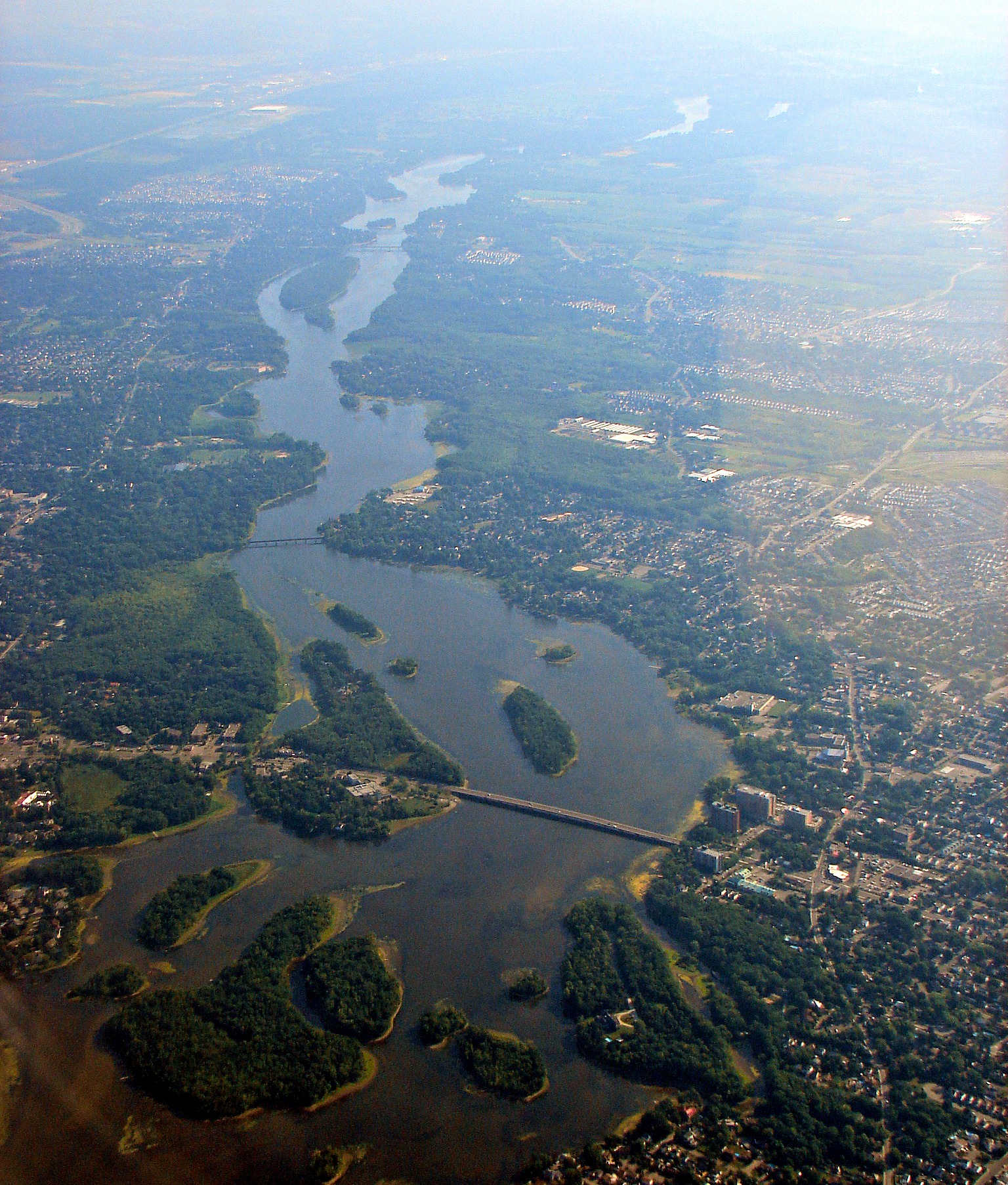
03 Aerial view of the rivière des Mille Îles and its archipelago, with the Marius-Dufresne Bridge between Laval and Rosemère
Waterfront

The rivière des Mille Îles and its archipelago

In front of Sainte-Rose, the river widens and fills with wooded islands. The Rivière-des-Mille-Îles wildlife refuge, established in 1998, protects 26 hectares, about ten islands, and some 42 kilometres of shoreline, marshes, and channels. You can spot turtles and herons here, fifteen minutes from the highway. It's not a new draw: the Sainte-Rose Boating Club was founded in 1889, near today's filtration plant on rue Hotte, and back then the village lived off summer visitors, Montreal merchants who came to spend their summers here.

Ask me about it: ask me which streets actually touch the water and which ones are only close to it. The distinction weighs heavily at resale.
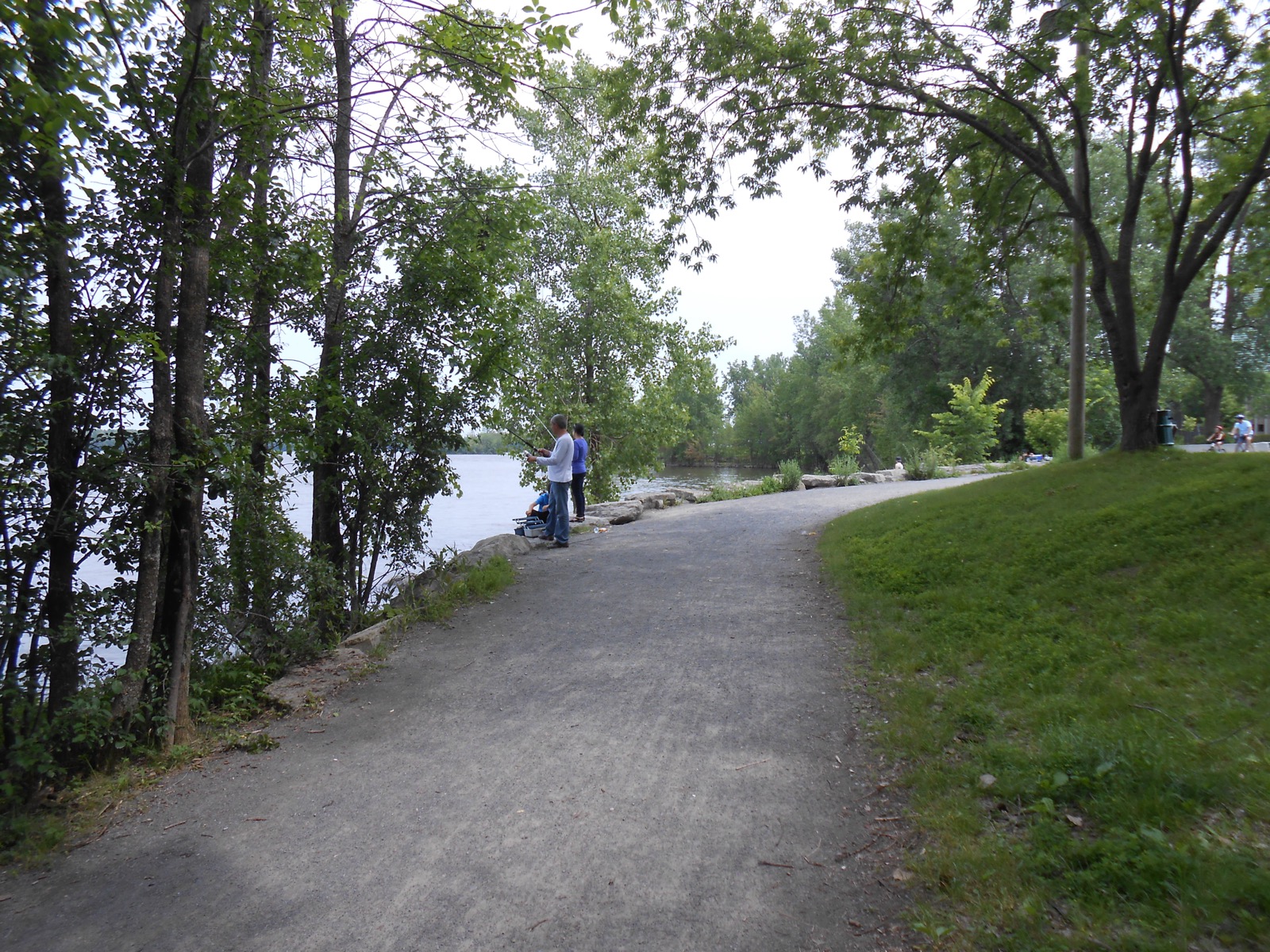
04 Waterfront trail at the parc de la Fabrique-Sainte-Rose, in Laval
Outdoors

Parc de la Rivière-des-Mille-Îles, at 345 Sainte-Rose

This is the area's big playground, run by Éco-Nature, an organization founded in 1985 by Jean Lauzon and Michel Aubé. Canoe, kayak, rabaska, and stand-up paddleboard, guided fishing outings, dawn and dusk excursions, three walking trails, and a summer day camp. The Centre d'exploration, opened in March 2019, houses a permanent exhibition, one of Quebec's largest taxidermy collections, and the province's first turtle rehabilitation centre.

Ask me about it: ask me which addresses let you walk down to the park with a kayak on your shoulder. There are some, and they don't stay on the market long.
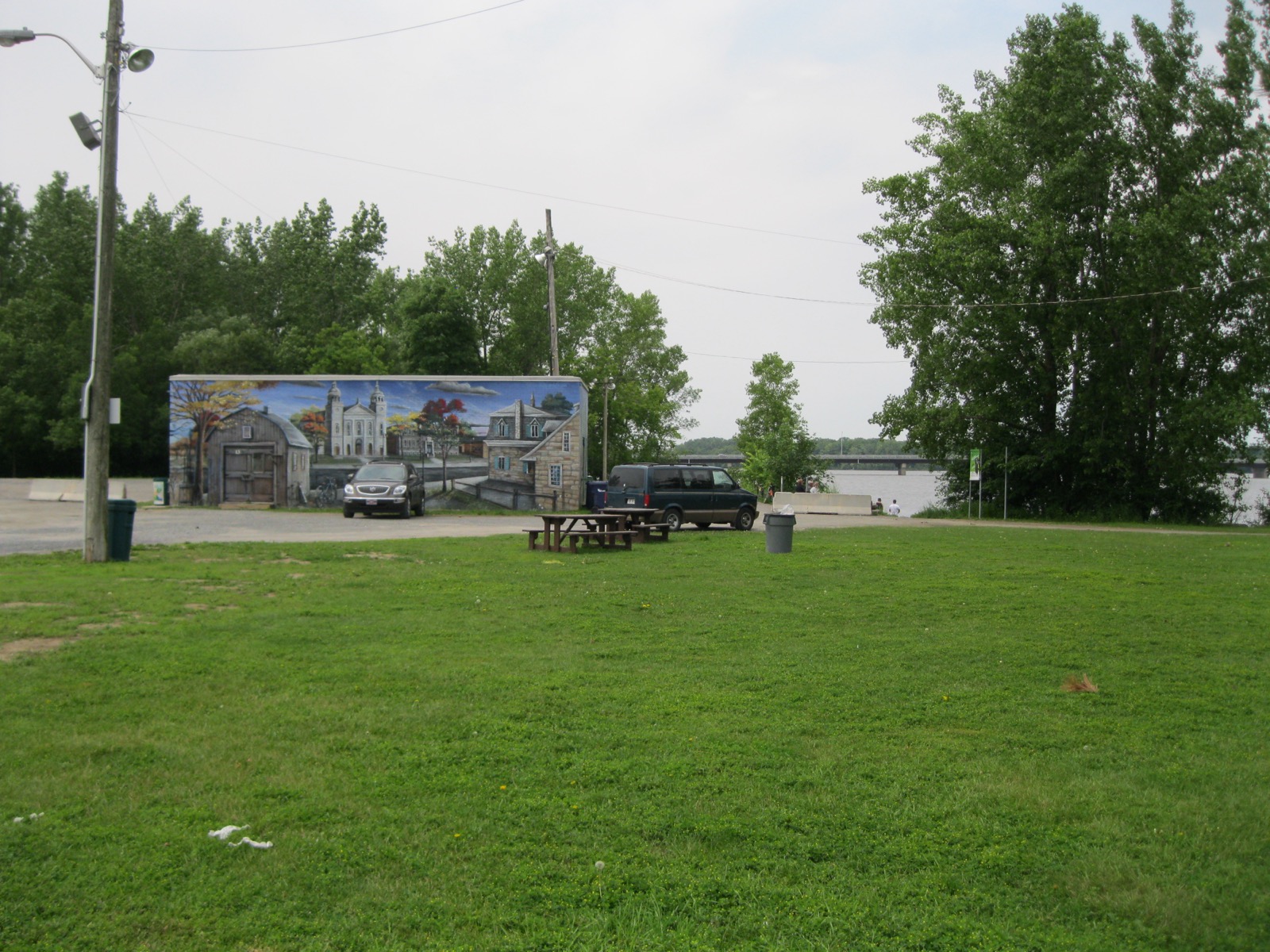
05 Mural of the old village and picnic area at the parc de la Fabrique-Sainte-Rose, in Laval
Nature

Parc de la Fabrique-Sainte-Rose, right behind the church

A municipal park wedged between the Sainte-Rose-de-Lima church and the river, west of rue Hotte, also connected to the parc de la Rivière-des-Mille-Îles. Picnic tables, a mural telling the story of the old village, a shoreline where people fish at the end of the day, and the bridge closing off the horizon. It's the kind of place I show buyers that settles the discussion without me needing to say much more.

Ask me about it: ask me how long it takes on foot from the village streets. It's often closer than buyers imagine.
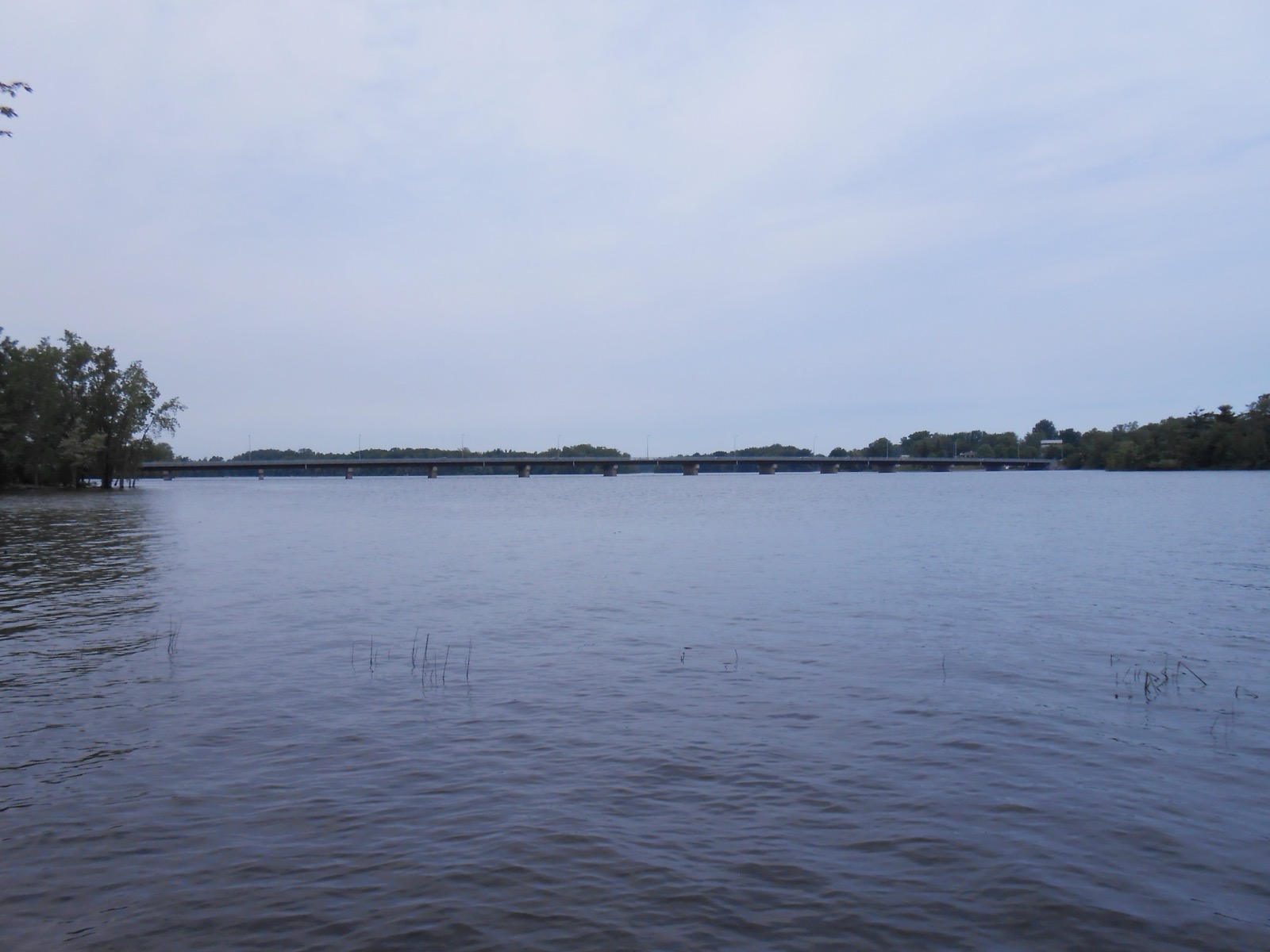
06 The Marius-Dufresne Bridge seen from the shore of the rivière des Mille Îles, in Sainte-Rose
Access

The Marius-Dufresne Bridge and the highways

Boulevard Curé-Labelle is route 117, and it crosses the river toward Rosemère via the Marius-Dufresne Bridge. Built from January to November 1945 and opened in August 1946, 486 metres long, it's named after engineer and architect Marius Dufresne, who died on the construction site in July 1945. It now carries close to 25,000 vehicles a day. As for the rest, Highway 15 runs along the area with exit 14 (route 117, boulevard Dagenais Ouest) and crosses toward Boisbriand via the Gédéon-Ouimet Bridge. Highway 440 connects the west and east ends of Laval, so highways 13 and 25, and Highway 640 runs along the other shore.

Ask me about it: ask me how many minutes it really takes downtown at rush hour. I'll give you the real number, not the brochure figure.
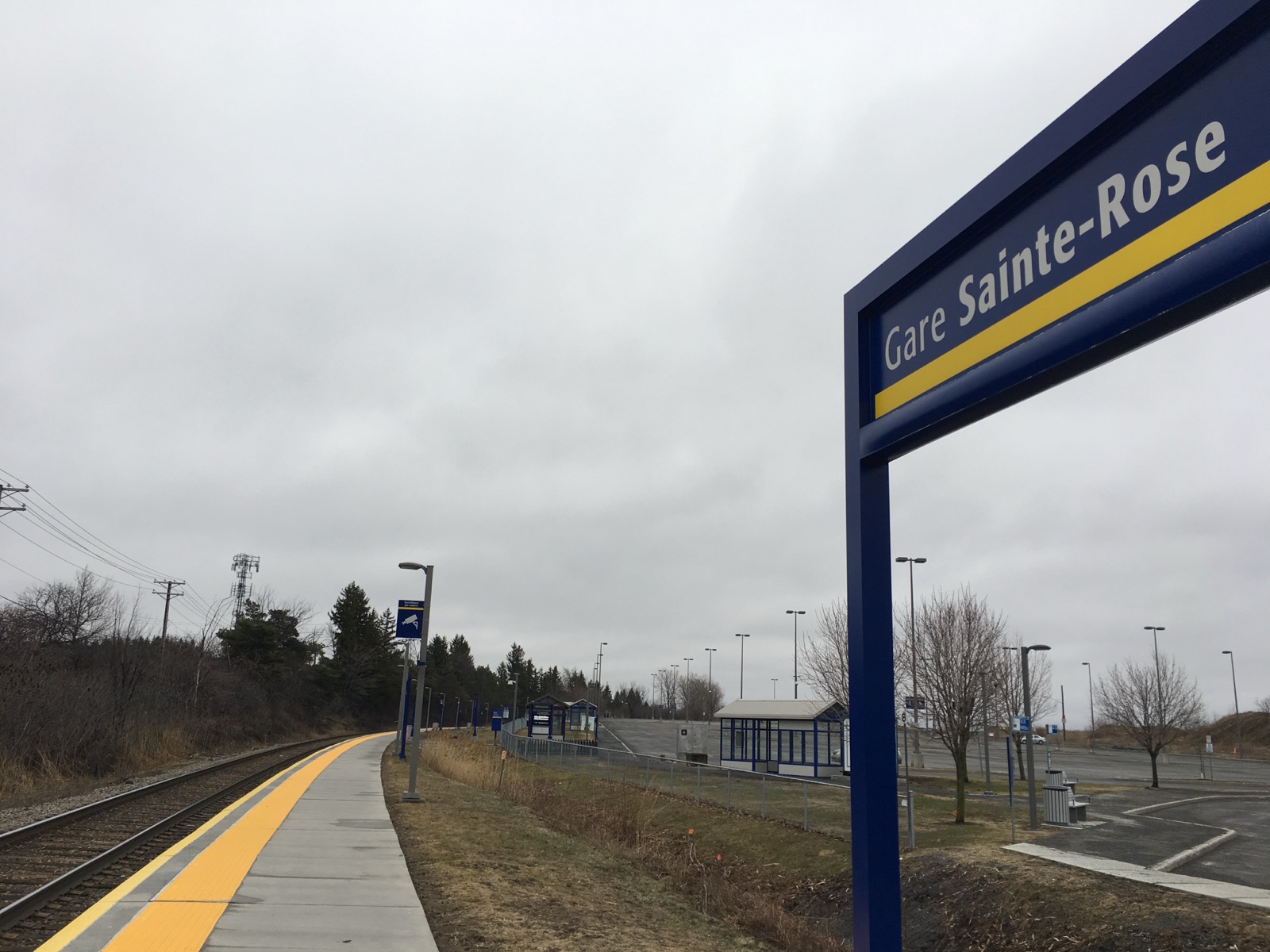
07 The sign and platform of the Sainte-Rose station, on the exo Saint-Jérôme line, in Laval
Transit

A train station right in the neighbourhood

The Sainte-Rose station, at 99 boulevard Sainte-Rose Est, has been in service since August 18, 1997 on the exo Saint-Jérôme line, which runs down to the Lucien-L'Allier station downtown. On the bus side, STL routes 63 and 65 connect the station to the Cartier and Montmorency metro stations, route 73 links the Cartier metro to Fabreville via boulevard Sainte-Rose, route 151 runs down boulevard Curé-Labelle to the Côte-Vertu metro, and route 76 runs from the Montmorency metro to the Sainte-Dorothée REM station. Useful detail: the REM stations in Laval are on the west end of the island, not in Sainte-Rose.

Ask me about it: ask me which areas are walkable to the station. For a buyer who works downtown, that's criterion number one.
08
The neighbourhoods

Champfleury, where the streets are named after birds

East of where Highway 15 meets boulevard Curé-Labelle, there's a residential area with a signature all its own: every street is named after a bird. Boulevard des Oiseaux, boulevard des Rossignols, and so on. Parc des Oiseaux, the largest in the area, brings together football, baseball, tennis, and basketball around L'Envolée elementary school, with a skating rink in winter. Lots of mature trees, bike paths, and carefully kept suburban houses.

Ask me about it: ask me what sets Champfleury apart from the rest of Sainte-Rose. Buyers often mix the two up, and they're not the same properties.
09
Family life

Champenois, the schools, and a growing neighbourhood

West of boulevard Curé-Labelle, Champenois is the most mixed area of the neighbourhood: about a quarter of Sainte-Rose residents were born abroad, often in Algeria, Haiti, Morocco, or Lebanon, and that's where it shows the most. On the school side, there's Demers, Des Cardinaux, Du Parc, L'Envolée, L'Aquarelle, and Villemaire elementary schools, the alternative school Le Baluchon, and Curé-Antoine-Labelle high school. English schools fall under the Sir Wilfrid Laurier school board. At the 2011 census, Sainte-Rose had just over 35,000 people, the strongest five-year growth anywhere in Laval.

Ask me about it: ask me which school serves the address you're interested in. I check before we make an offer, never after.
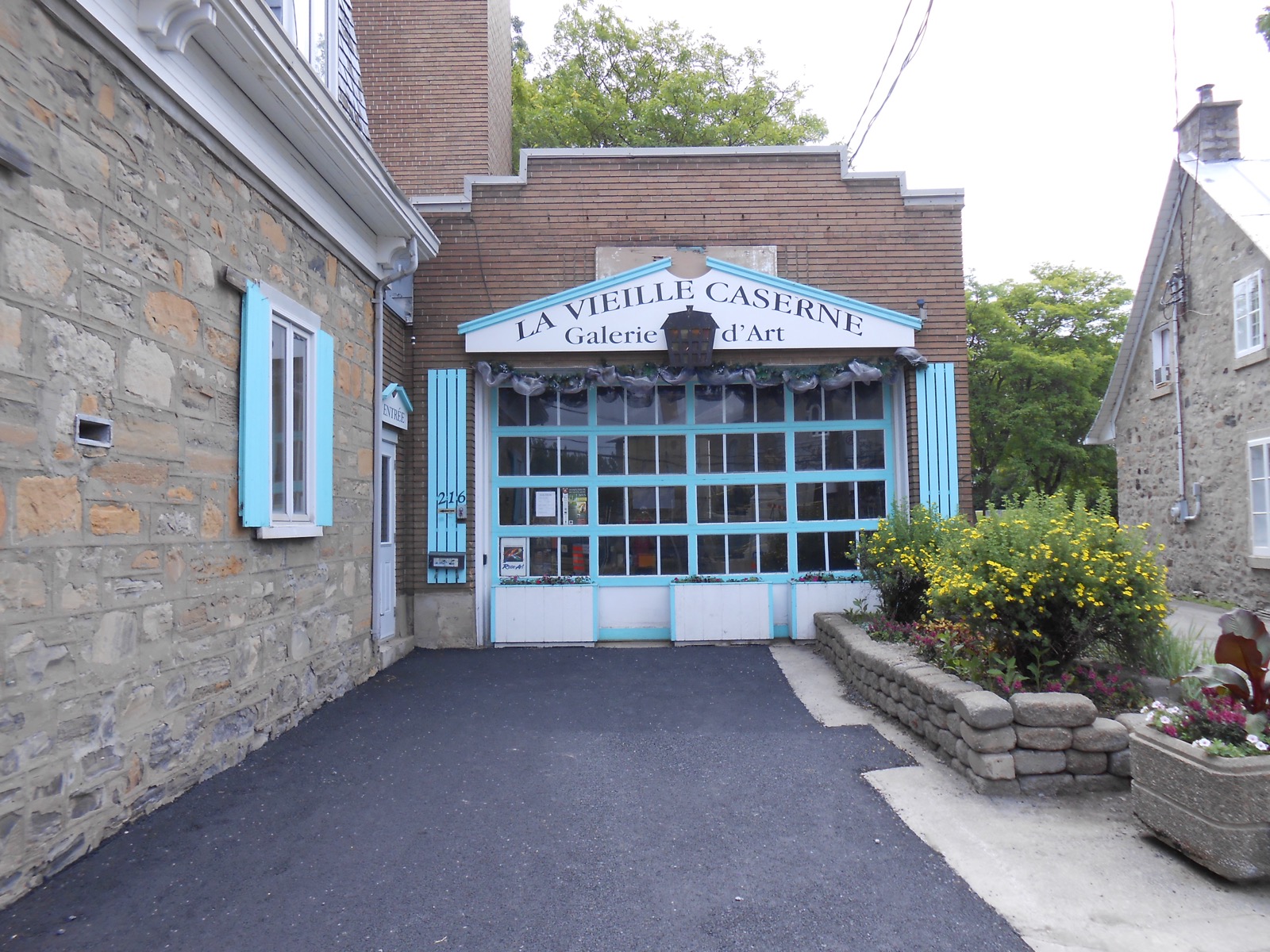
10 The La Vieille Caserne art gallery, at 216 boulevard Sainte-Rose, in Laval
Local colour

Art galleries and two hometown figures

Boulevard Sainte-Rose has kept its artisan streak: La Vieille Caserne at 216 and Le Pépin d'art at 204 show work inside former village buildings, a stone's throw from the restaurants. That's no accident. Painter Marc-Aurèle Fortin was born here on March 14, 1888, the one known for his oversized elms hiding modest houses, and both an avenue and a neighbourhood park carry his name. The other famous hometown figure is Curé Antoine Labelle, born in Sainte-Rose on November 24, 1833, a shoemaker's son who became the coloniser of the Laurentians and deputy minister of Colonization under Honoré Mercier. His name is on the boulevard and on the high school.

Ask me about it: ask me how I use this history in a listing. Told well, it attracts the right buyer.
Let's talk

Thinking of buying or selling in Sainte-Rose? Let's start with a conversation.

A free evaluation of your property, a picture of the local market, or simply answers to your questions. No strings attached, and a straight answer.

Start my real estate project

Photo credits