← Back to the North Shore map
Area · City of Rosemère, Basses-Laurentides

Rosemère

Stone houses on the Grande-Côte, the river at the end of the street, and trees nobody cuts down. Here's my top 10, the neighbour's version, not the brochure's.

Let's talk about this area

Rosemère is a small city of a little over 14,000 people, tucked between Sainte-Thérèse, Lorraine, Bois-des-Filion and the Rivière des Mille Îles, about thirty kilometres north of Montreal. Twelve square kilometres, 4.5 km of shoreline, and a reputation that precedes it: that of a city that protected its trees and its big lots while its neighbours were densifying.

Its name comes from a 19th-century resident, J.P. Withers, who combined the word "rose," for the area's wild rose bushes, with the old English word "mere," which means marsh. That sums up the place fairly well. Rosemère split off from Sainte-Thérèse-de-Blainville in 1947 and became a city in 1958, but its history goes back to the Seigneurie des Mille-Îles, granted in 1683.

I put this top 10 together for a simple reason: when you buy or sell, you're not just shopping for a property, you're shopping for a neighbourhood life. Every point comes with an opening for a conversation. Use it.

Maxime Laforest, residential and commercial real estate broker · Équipe Loiselle, RE/MAX Dynamique

The area's top 10

What makes the heart of Rosemère beat.

Ten reasons buyers cross the Rivière des Mille Îles, and why the ones already settled here don't leave.

01 The Twin Chimney house, a former stone home converted into a shop, on chemin de la Grande-Côte in Rosemère
The artery

Chemin de la Grande-Côte

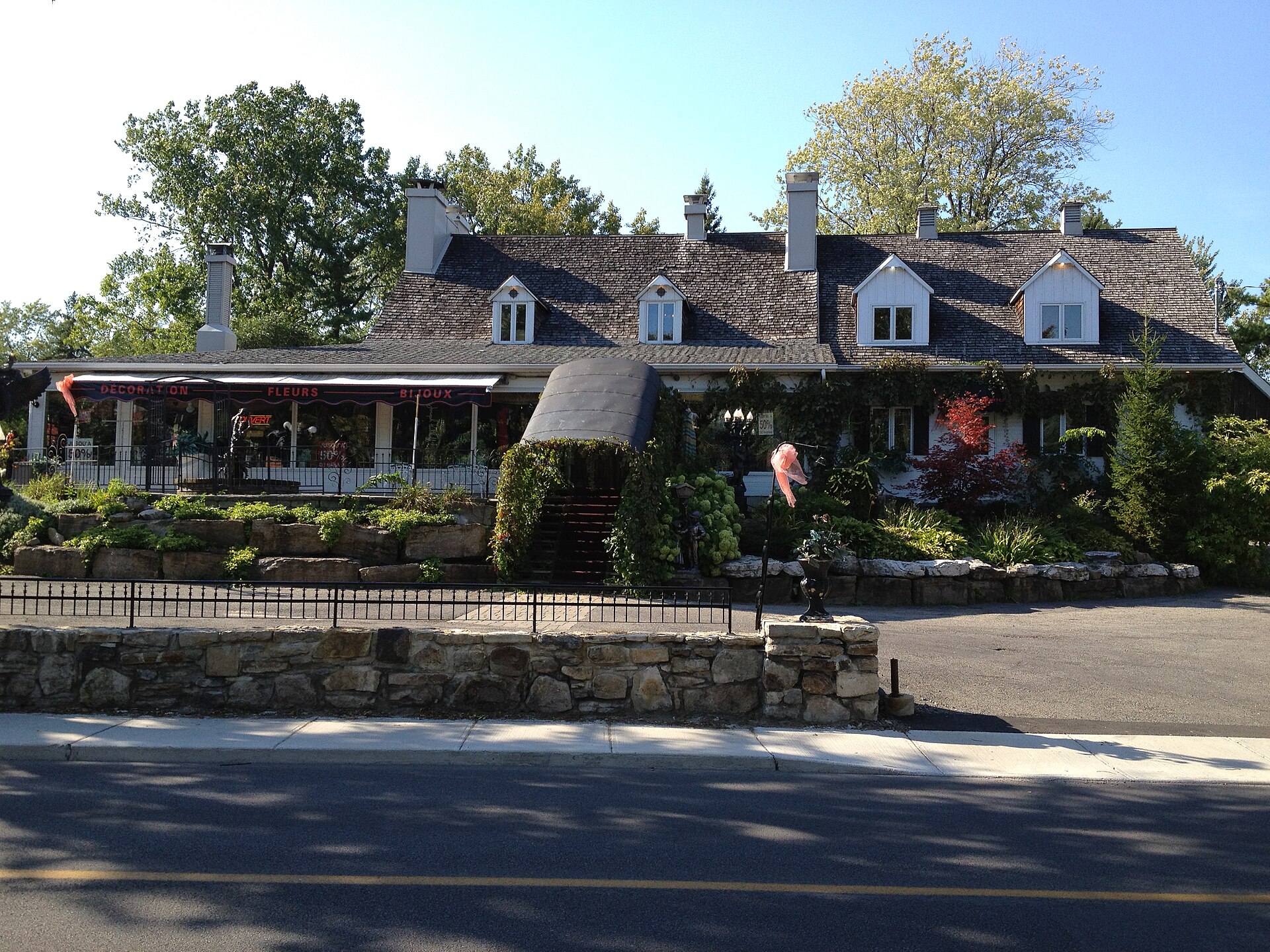
This is the old seigneury road, and it's still the city's backbone today. You drive it slowly, past stone houses from the 18th and 19th centuries, shops set up in former homes, and lots lined with mature trees. The Twin Chimney house, at 447, was built by the British army to watch over the Saint-Eustache Patriotes in 1837. The Hubert-Maisonneuve house, at 369, already existed in 1832. Few north-shore suburbs have kept a main street with this much memory.

Ask me about it: ask me what it means to buy on the Grande-Côte or right next to it. The noise, the easements and the conservation rules aren't the same from one stretch to the next.
02 Aerial view of the Rivière des Mille Îles and its wooded islands, with the pont Marius-Dufresne connecting Laval to Rosemère
Waterfront

The Rivière des Mille Îles, 4.5 km of shoreline

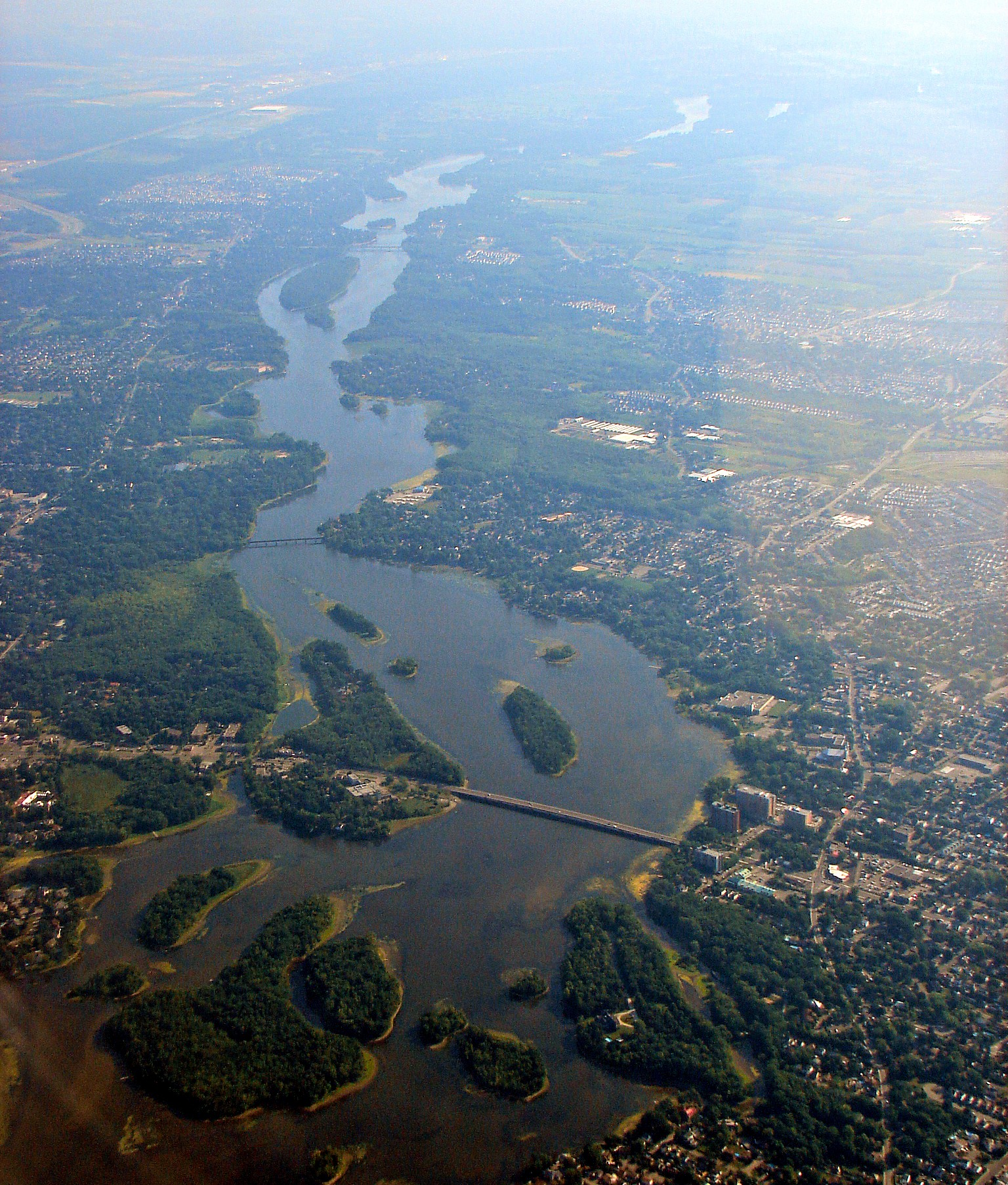
The city's entire southern boundary faces the river. Wooded islands, calm bays, private docks at the end of some lots, and the pont Marius-Dufresne spanning it all to reach Sainte-Rose, in Laval. By kayak or canoe, you're in scenery that feels nothing like a city, fifteen minutes from the highway. It's the number one draw for people who move here, and it's also why a riverfront address doesn't compare well with the rest of the city.

Ask me about it: ask me what to check before buying a riverfront lot in Rosemère. Flood zone, riparian strip, dock rights: check those before the offer, not after.
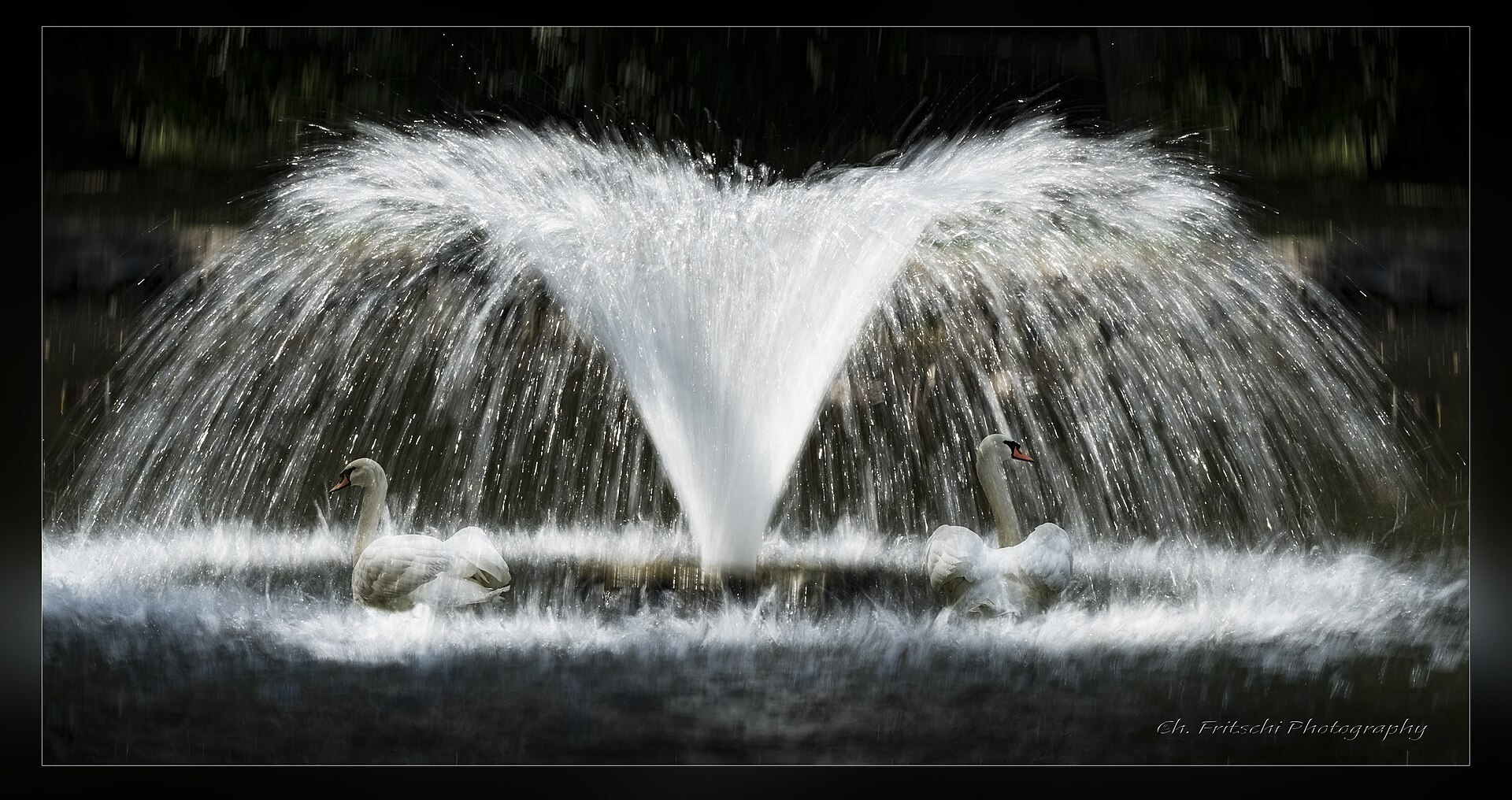
03 Mute swans near a fountain at Parc Charbonneau, in Rosemère
Outdoors

Parc Charbonneau and its pavillon Floreat

This is the city's big riverfront park, and it's been completely redone. The pavillon Floreat, opened in 2021, offers 1,400 square feet on the water with changing rooms, an observation deck upstairs and a boat rental counter run by Éco-Nature. The banks have been renaturalized with permeable trails and native vegetation. In winter, a grassy area turns into a skating rink. The boat launch is free for human-powered craft; for motors, it's reserved for residents.

Ask me about it: ask me which areas let you reach Parc Charbonneau on foot or by bike. It's a detail that carries more weight than people think in a buying decision.
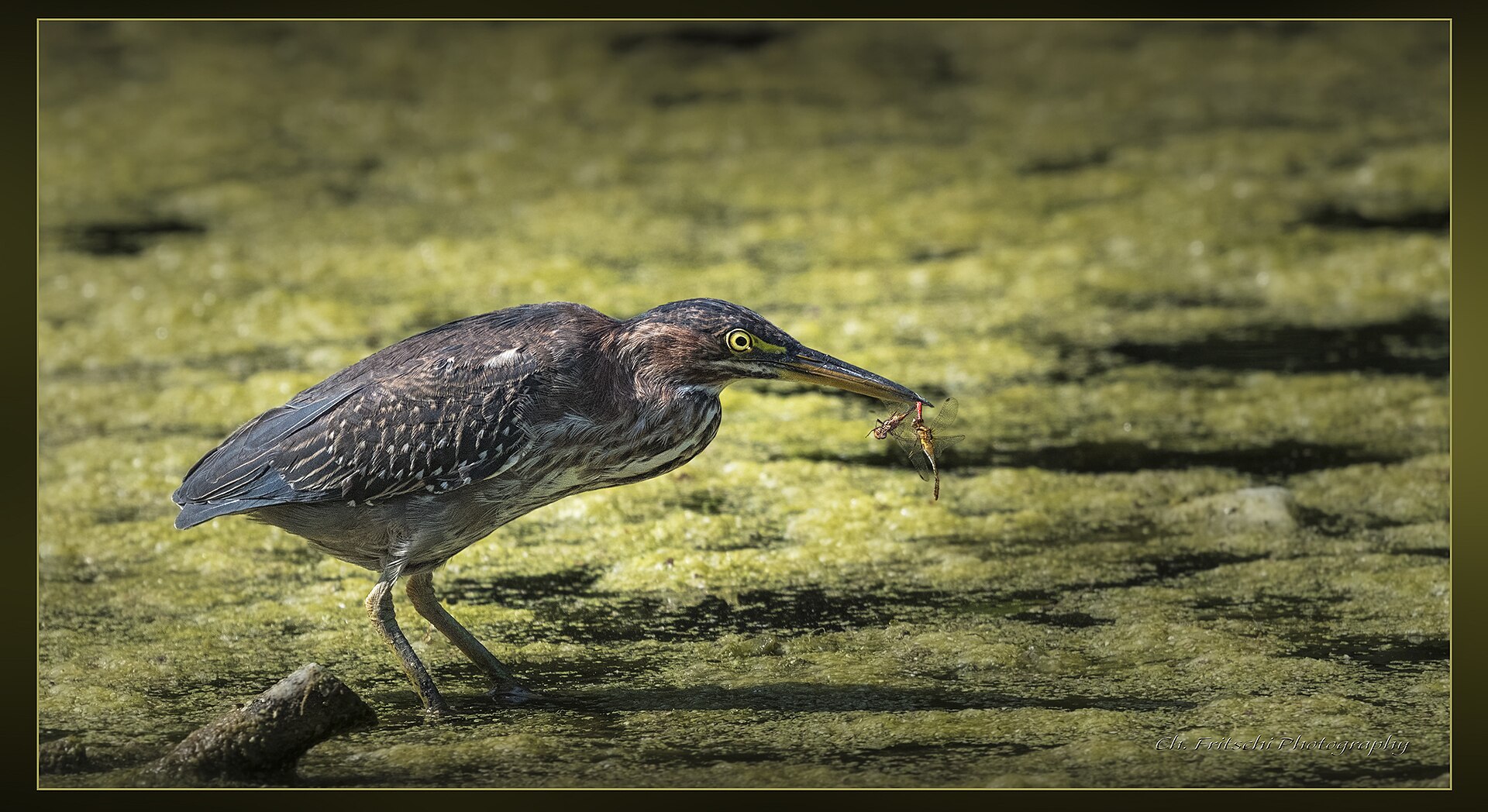
04 A green heron fishing in a marsh in Rosemère, along the Rivière des Mille Îles
Nature

The Miller marsh and the Tylee wetland

On either side of Parc Charbonneau, two wetlands known for their turtle colonies. Green herons, ducks, shorebirds: it's one of the richest spots for biodiversity in the whole north shore, and you can visit it in silence, a few streets from perfectly ordinary suburban homes. Rosemère has about fifteen parks in total, and roughly 11% of its territory is green space.

Ask me about it: ask me which streets back directly onto a protected natural area. It changes the view, it changes the neighbours, and it changes what can be built next door.
05
The hot topic

The former golf course site

The golf club closed in 2018 and the land, about 60 hectares right in the heart of the city, was sold to private interests. Since then, nature has been taking it back over, and the issue dominates local conversation. Close to 90% of the site is zoned public, which doesn't allow construction; only a strip along boulevard Labelle is developable as of right. The city is pushing for at least half the site to keep an ecological and recreational purpose, and three rounds of consultations have already gathered more than 1,600 citizen contributions.

Ask me about it: ask me where things stand before making an offer in that area. It's the first question I ask when a client is eyeing a street backing onto the former golf course.
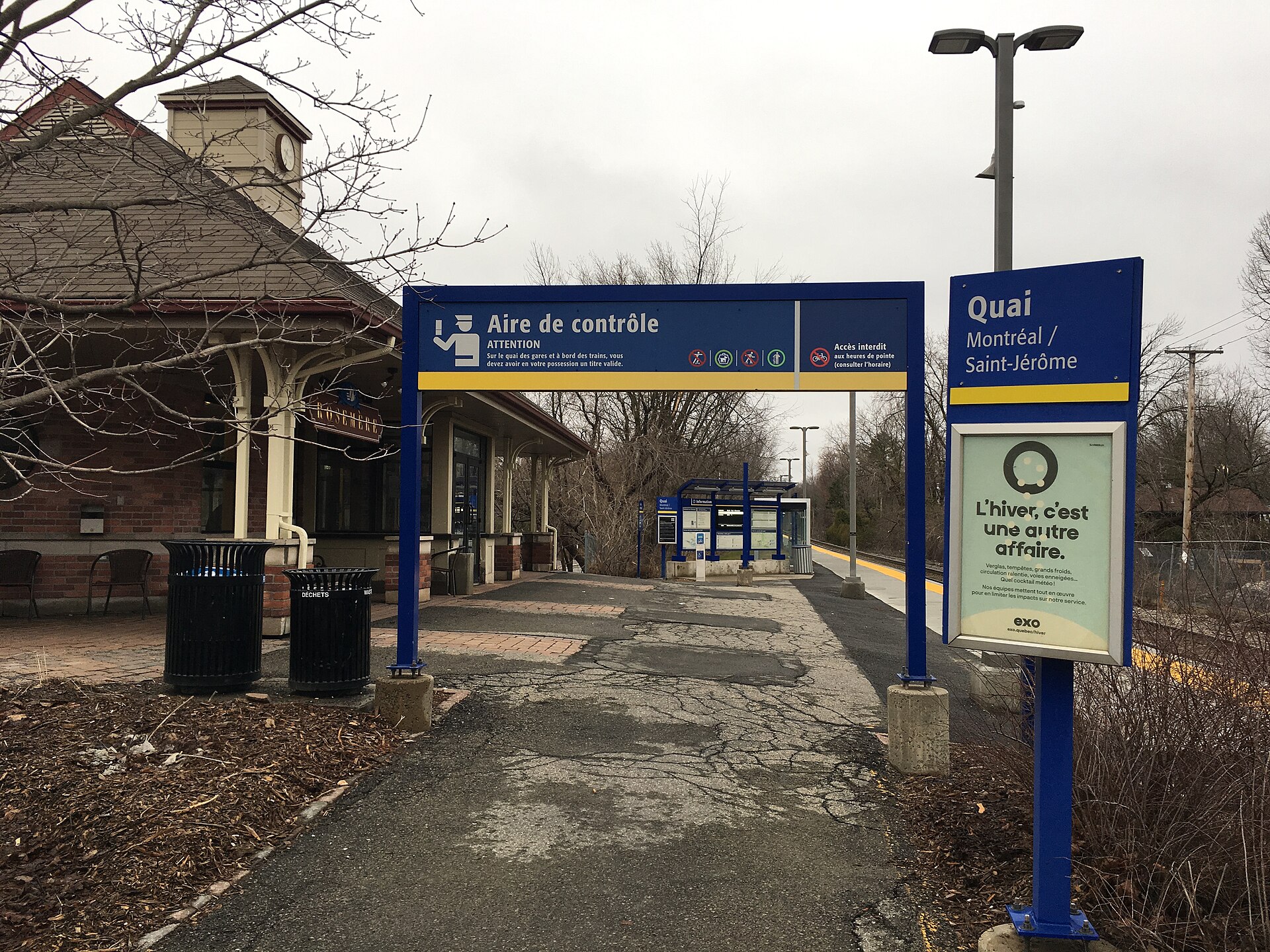
06 The platform and building of the Rosemère train station, on the exo Saint-Jérôme line
Transit

The station, the buses and the highways

The Rosemère station sits on ligne 12 Saint-Jérôme, at the corner of the Grande-Côte, and gets you to gare Lucien-L'Allier in about fifty minutes. Exo's Laurentides sector buses round out the network, including ligne 242, which links Sainte-Thérèse, Rosemère and Sainte-Rose. For drivers, Highway 640 crosses the north of the territory and meets Highway 15 right nearby, while Route 117, boulevard Labelle, cuts the city from north to south. Worth noting: there's no metro and no REM in Rosemère. Those who want the metro drive to Montmorency, in Laval.

Ask me about it: ask me how long it really takes from your future address to your office, at rush hour. We can run that exercise before you even go see the place.
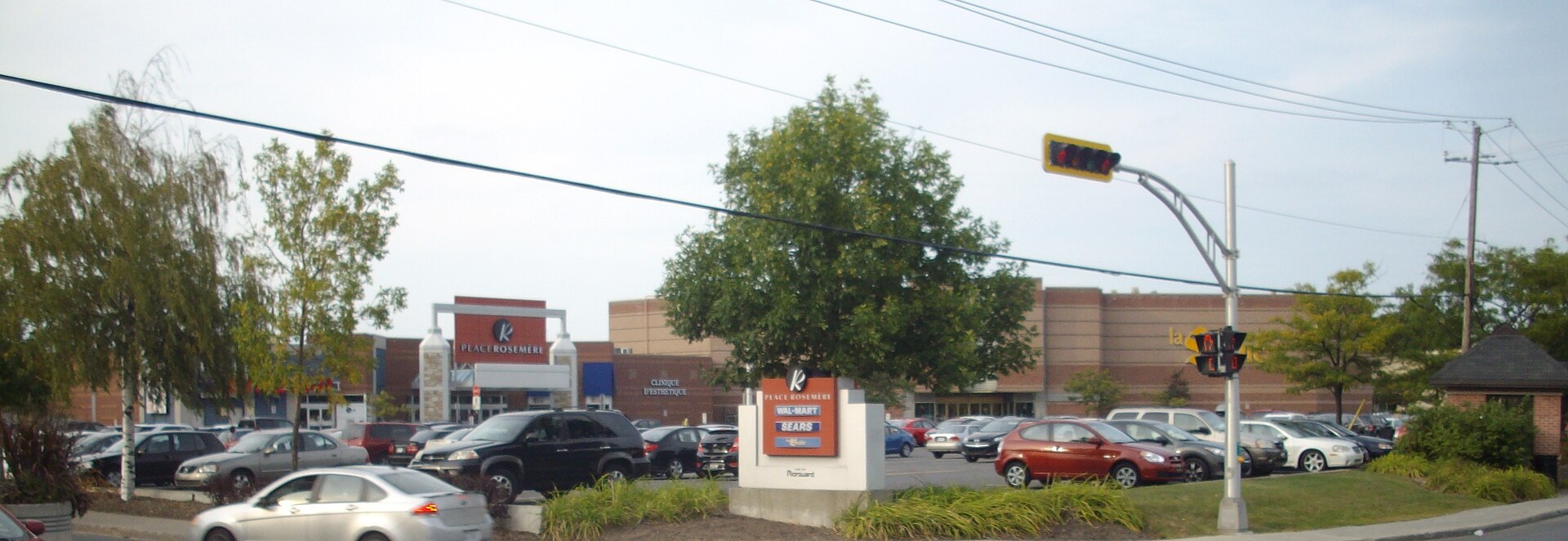
07 The entrance to the Place Rosemère shopping centre and its parking lot
The projects

Place Rosemère and the regional hub

The shopping centre, sitting at the corner of Highways 15 and 640, serves the whole Thérèse-De Blainville RCM. The city is preparing a special urban planning program to turn this area into a real place to live: 1,400 to 2,000 housing units floated so far, more greenery, progressive densification around the commercial hubs, with the former Sears as the only demolition planned for now. Rollout is expected over ten to twelve years, and the concordance bylaws are working their way through the process in 2026, public consultations included.

Ask me about it: ask me what that project could change for the streets around it. A commercial area turning into a neighbourhood reads differently depending on whether you're buying or selling.
08 The Bleury-Bouthillier stone manor, on chemin de la Grande-Côte in Rosemère
Heritage

The Bleury-Bouthillier manor and the Maison Hamilton

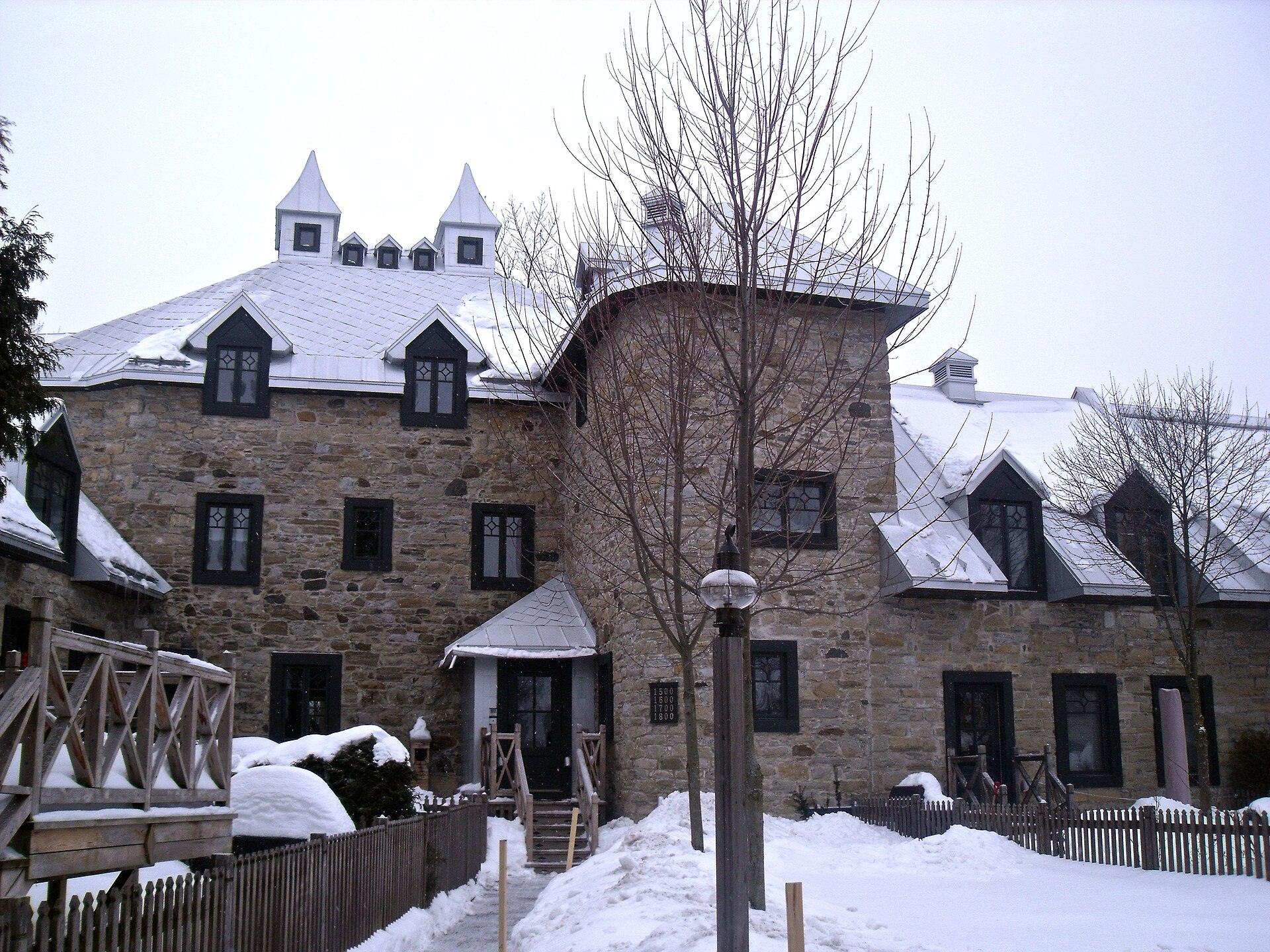
At 90 chemin de la Grande-Côte, architect Charles-Frontenac de Bouthillier had a replica of a Norman seigneurial estate built between 1883 and 1887: manor, chapel, keep, stable and barn. It's private, but worth a look as you drive by. A bit further on, at 106, the Maison Hamilton, whose main structure reportedly dates from 1796, has belonged to the city since 2002 and has served as a cultural centre since 2004, with its gardens and its peony collection. Two addresses that explain why Rosemère doesn't look like the suburbs built all at once in the 1970s.

Ask me about it: ask me how Rosemère's older homes tend to hold up during inspection. I have specific instincts and contacts for this kind of building.
09 Small white church at the end of a lane lined with tall trees, in Rosemère
The character

The tall trees and the countryside feel

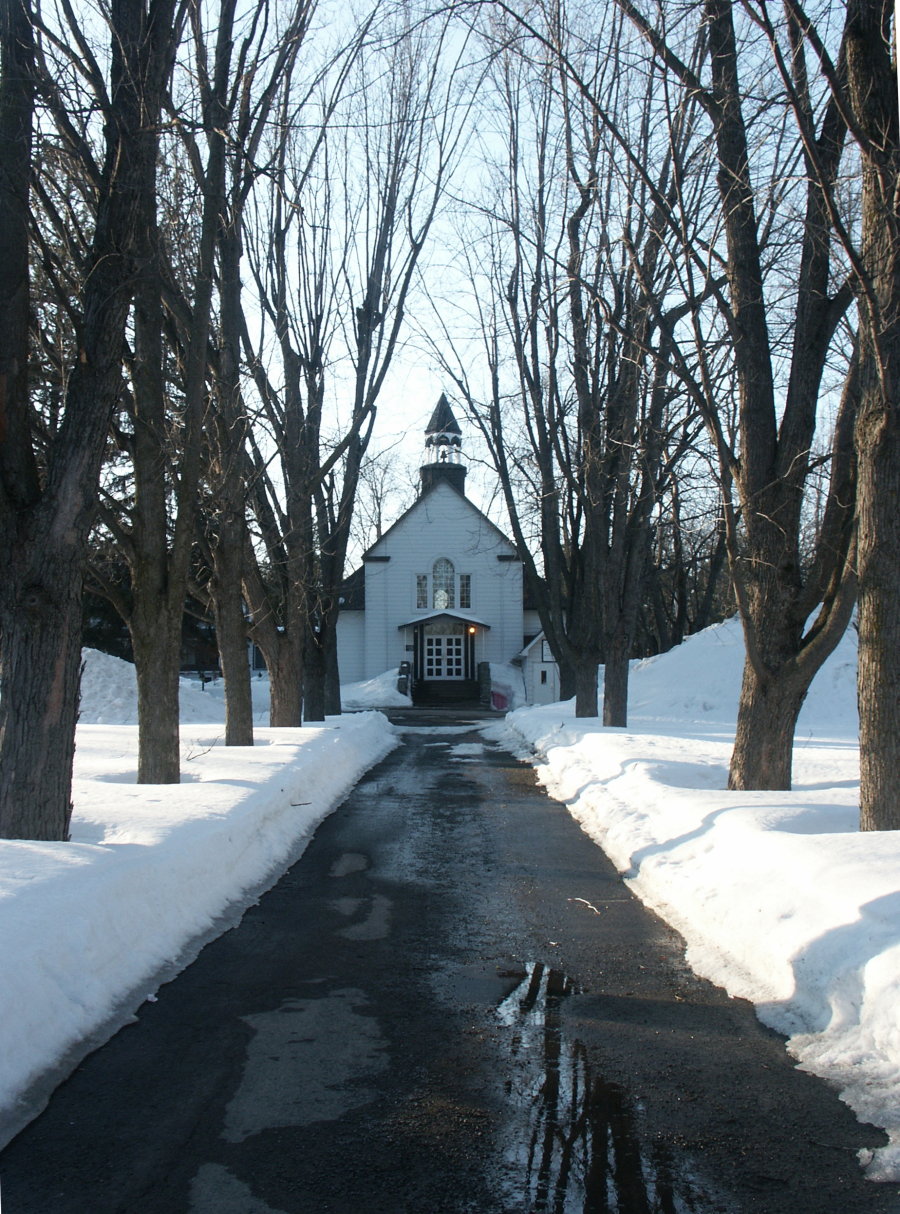
It's the first thing my clients notice when we turn into the residential streets: the trees are old and tall, the lots are wide, and the houses often hide behind a curtain of foliage. The city was a resort town before it was a suburb, and it has stubbornly defended that character. The Sainte-Françoise-Cabrini church and its presbytery still anchor the parish core. It's a far cry from the cookie-cutter developments, and that's exactly what buyers come here looking for.

Ask me about it: ask me how the tree-cutting and vegetation-cover rules come into play when you want to add on or put in a pool. It surprises a lot of people.
10
Family life

A bilingual city and its schools

Rosemère is one of the few Quebec municipalities with bilingual status, obtained in the early 1980s. The majority of the population is francophone, but the English-speaking community is notably more present here than elsewhere in the Laurentians. The Sir Wilfrid Laurier School Board's head office is here, along with McCaig Elementary and Rosemere High School. On the French side, there are neighbourhood elementary schools and the Académie Sainte-Thérèse, whose Rose-DeAngelis campus welcomes about 800 students from preschool to grade 5. Add that Alexandre Bilodeau grew up here, and you'll understand why families get attached to the place.

Ask me about it: ask me which areas correspond to which schools. It's often the real starting point of a search in Rosemère, even before the budget.
Let's talk

Thinking about buying or selling in Rosemère? Let's start with a conversation.

A free evaluation of your property, a picture of the local market, or simply answers to your questions. No strings attached, and a straight answer.

Start my real estate project

Photo credits