← Back to the South Shore map
Area · Municipality of Saint-Jean-Baptiste, Vallée-du-Richelieu

Saint-Jean-Baptiste

A village gathered around its church, fields as far as the eye can see between two mountains, and a huge playground at the end of chemin de Rouville. Here's my top 10, neighbour version, not brochure version.

Let's talk about this area

Saint-Jean-Baptiste is unapologetic countryside in the south crown. You leave the Richelieu valley, drive past the orchards, and the landscape does the rest: straight concession roads, silos, Mont Saint-Hilaire on one side, Mont Rougemont on the other. In the middle, a village of a bit over 3,000 people gathered around one of the most beautiful churches in Montérégie. The municipality belongs to Vallée-du-Richelieu and Greater Montreal, but here, nobody's playing at being suburban: people come looking for air, land and a real village life.

I put this top 10 together for a simple reason: when you buy or sell, you're not just shopping for a property, you're shopping for a village life. Every point comes with a conversation starter. Use it.

Maxime Laforest, residential and commercial real estate broker · Équipe Loiselle, RE/MAX Dynamique

The area's top 10

What makes Saint-Jean-Baptiste tick.

Ten reasons buyers fall in love with the village, and why the ones who settle here never leave.

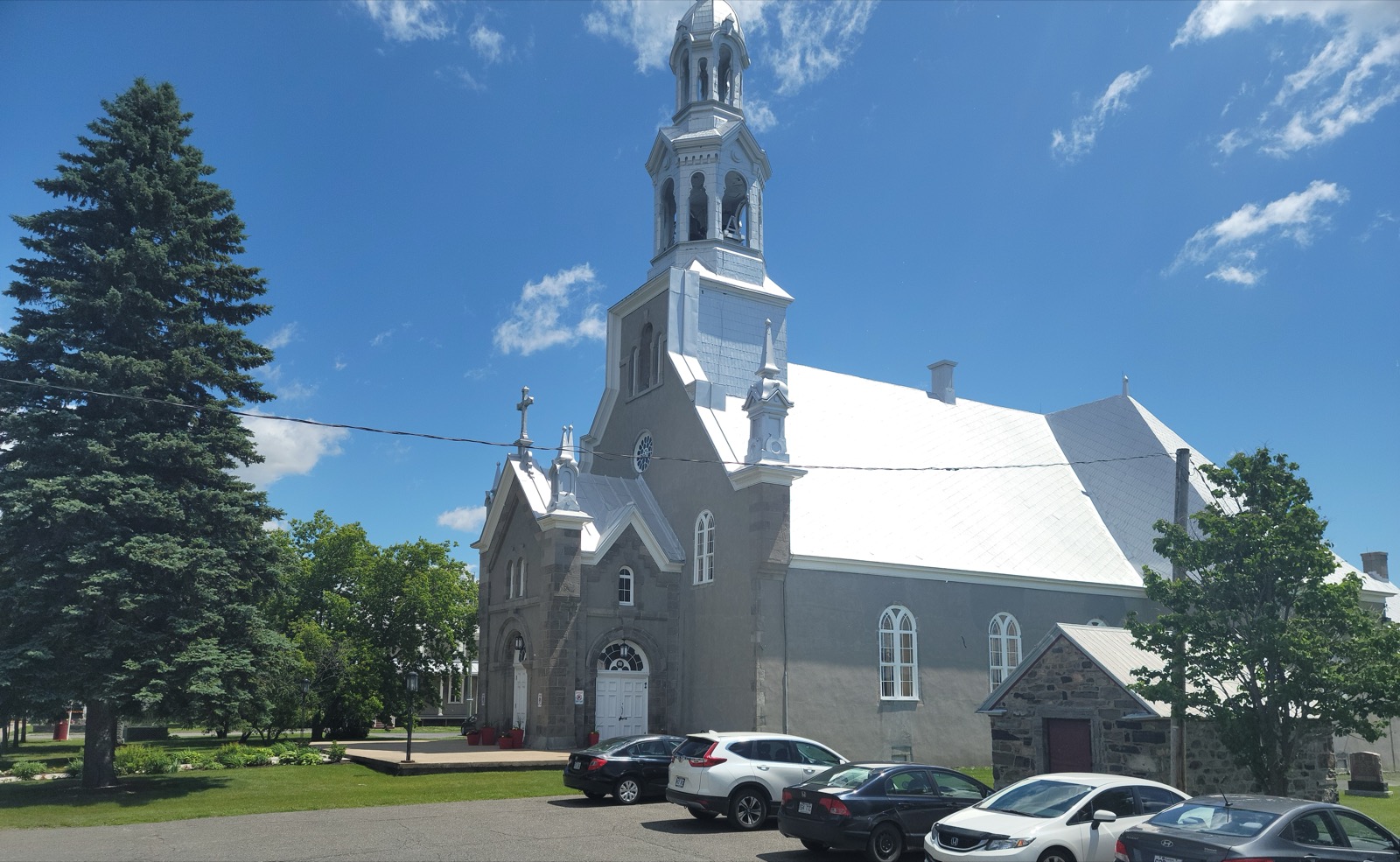
01 The facade and bell tower of the Saint-Jean-Baptiste church, in the heart of the village
The icon

A church watching over the village since 1810

The parish was founded at the end of the 18th century, and its church was built between 1807 and 1810, before getting its current facade in 1886. Heritage classified since 1960 and decorated with frescoes by painter Meloche, it's often described as one of the most beautiful churches in Montérégie. The old rectory faces it, city hall is its immediate neighbour: the whole village was built around it.

Ask me about it: ask me what a heritage core this well preserved does for the value of the properties around it. Character isn't something you can add after the fact.
02
The landscape

Two mountains for a horizon

The territory stretches over 73 square kilometres of farmland, wedged between Mont Saint-Hilaire and Mont Rougemont. Grain fields, livestock farms, stables, nurseries: it's a working countryside, not a backdrop. You drive the concession roads and the two mountains trade places in the windshield, with sunsets that have nothing to envy from the riverside.

Ask me about it: ask me what to check before buying in an agricultural zone. It's a world of rules all its own, and it's better to know them before you fall in love with a lot.
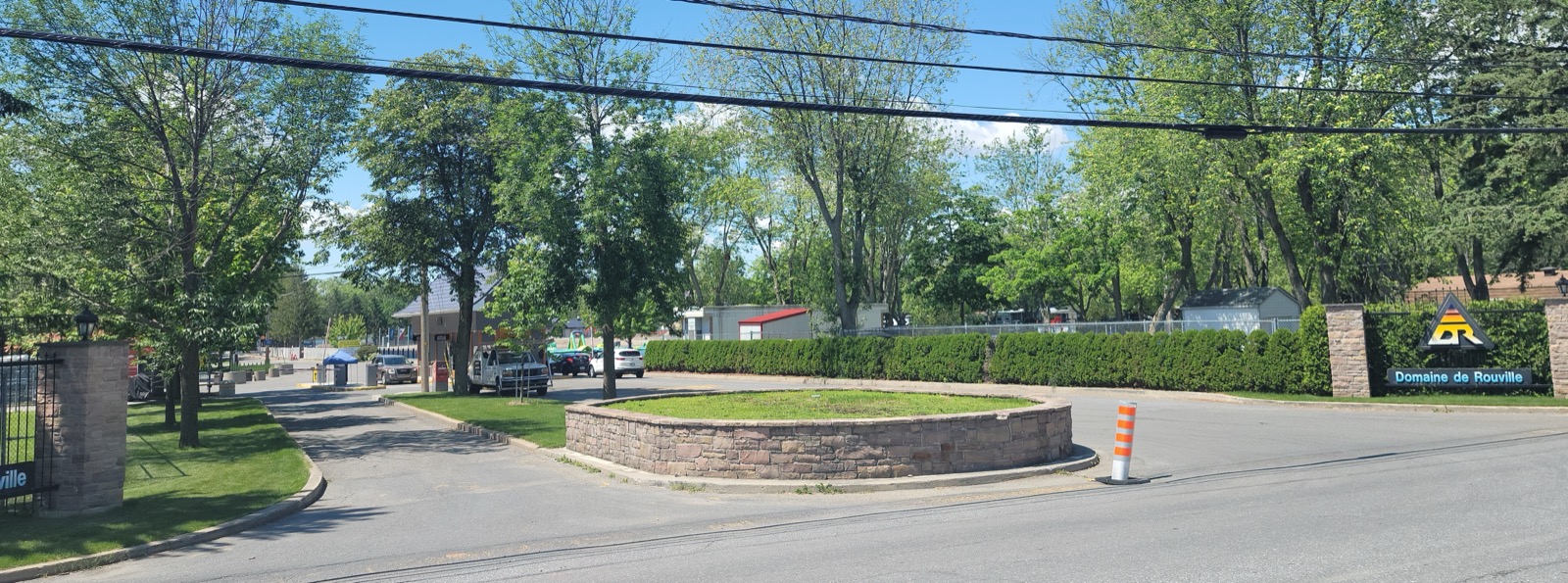
03 The main entrance of Domaine de Rouville, on chemin de Rouville
Recreation

Domaine de Rouville, summer in full swing

An 18-hole golf course, a water park and one of the largest private campgrounds in the country: Domaine de Rouville draws several thousand visitors a year, five minutes from the village core. For a lot of families in the region, childhood summers happened right here, between the wave pool and the Sunday morning round of golf.

Ask me about it: ask me how a village this quiet manages to host an attraction of this size without losing its calm the rest of the year. The answer is in the geography.
04
Local terroir

A countryside that feeds you well

In spring, the local sugar bushes fill the air and the sugar shacks run at full tilt. The rest of the year, spots like Vignoble Les Murmures or the Mes Petits Caprices farm give you a good reason to take the concession road instead of the highway, and farm stands make anyone happy who likes knowing where their plate comes from. Rougemont and its orchards are ten minutes away.

Ask me about it: ask me for my favourite food spots in the area. It's the kind of visit that often ends up convincing a hesitant buyer.
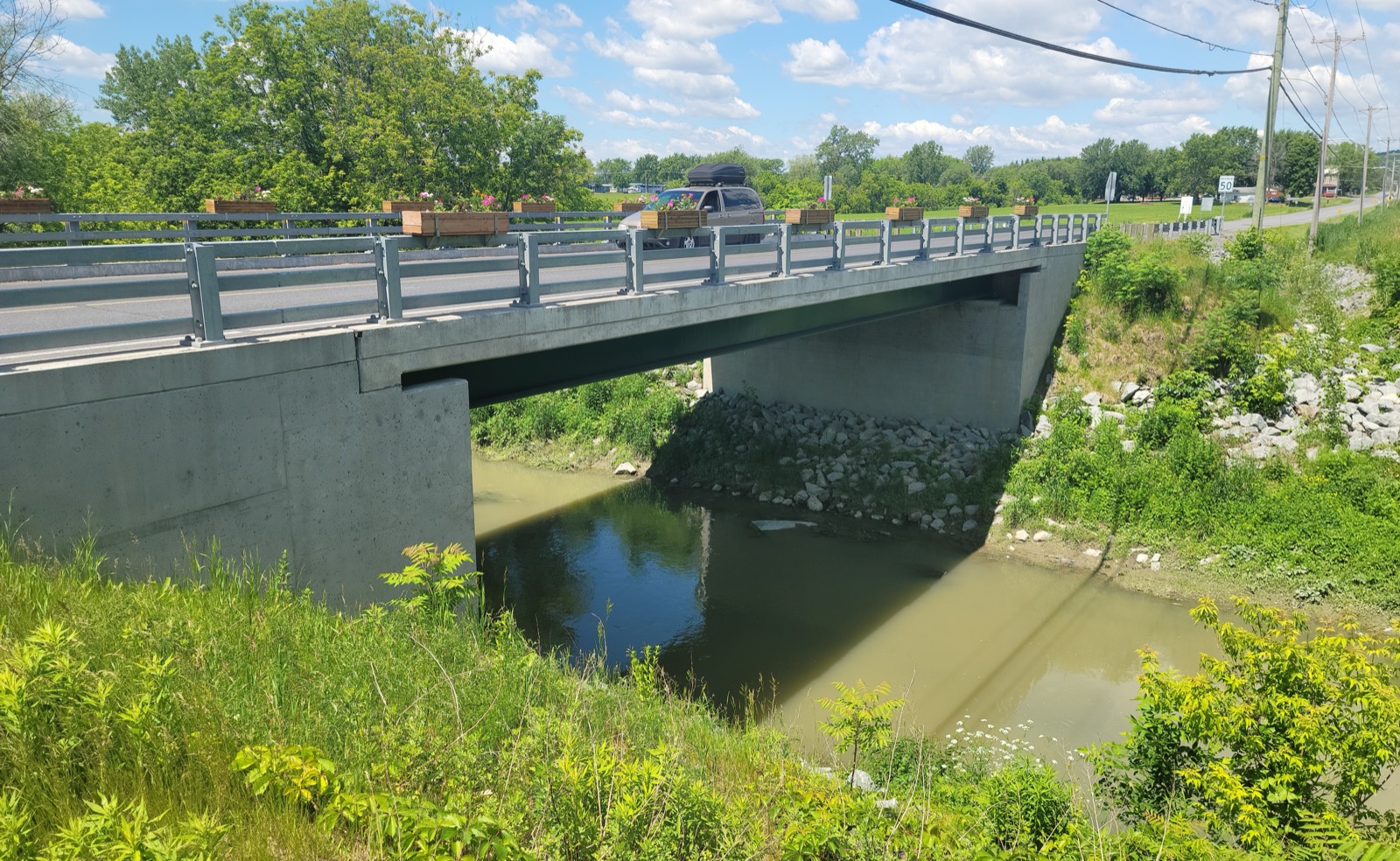
05 The Rivière des Hurons seen from a bridge on chemin de Rouville, in Saint-Jean-Baptiste
Nature

The Rivière des Hurons, quiet and constant

It flows down from the north, runs along the west side of the village and joins the Richelieu. You cross it on the chemin de Rouville bridges, catch glimpses of it between fields, and it's a reminder that this territory was built along the water long before the highways. The herons figured that out a long time ago.

Ask me about it: ask me what I check when a property is close to a waterway: risk zones, riparian buffer, insurance. Better to know before signing than after.
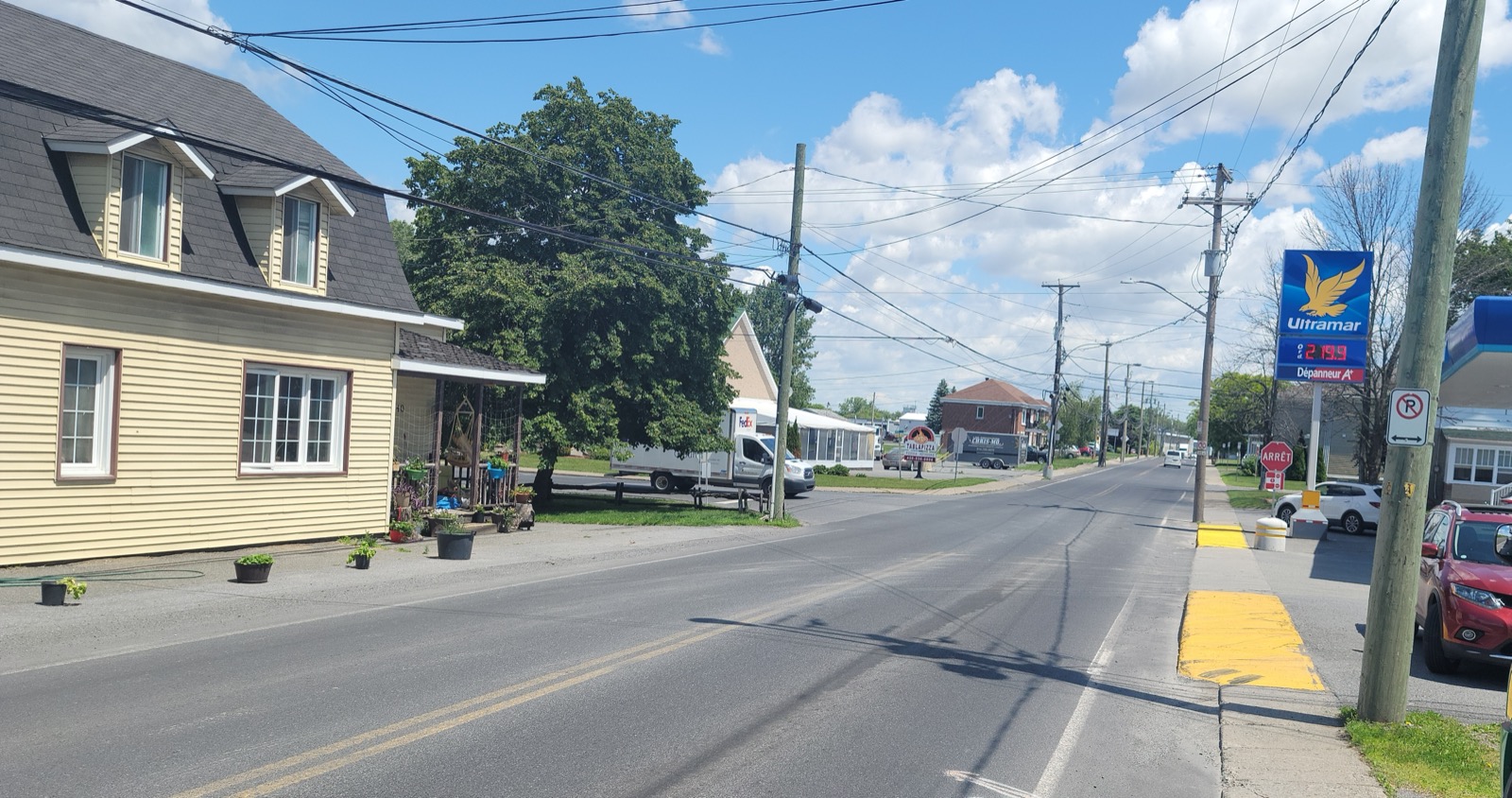
06 Rue Principale in Saint-Jean-Baptiste, which follows the path of Route 229
Everyday life

Rue Principale, and the road that leads everywhere

The village stretches on either side of Route 229, called rue Principale here, with the convenience store, the gas station and the basic services within walking distance. Route 227 also crosses the territory and runs to Highway 20; Montreal is about 45 minutes by car, and the exo train leaves from the Mont-Saint-Hilaire station, about fifteen minutes away. The straight goods: there's no bus in the village, so the car is part of the lifestyle.

Ask me about it: ask me how the village's commuters organize their weeks between the countryside and the city. It's the first question to settle before setting up here.
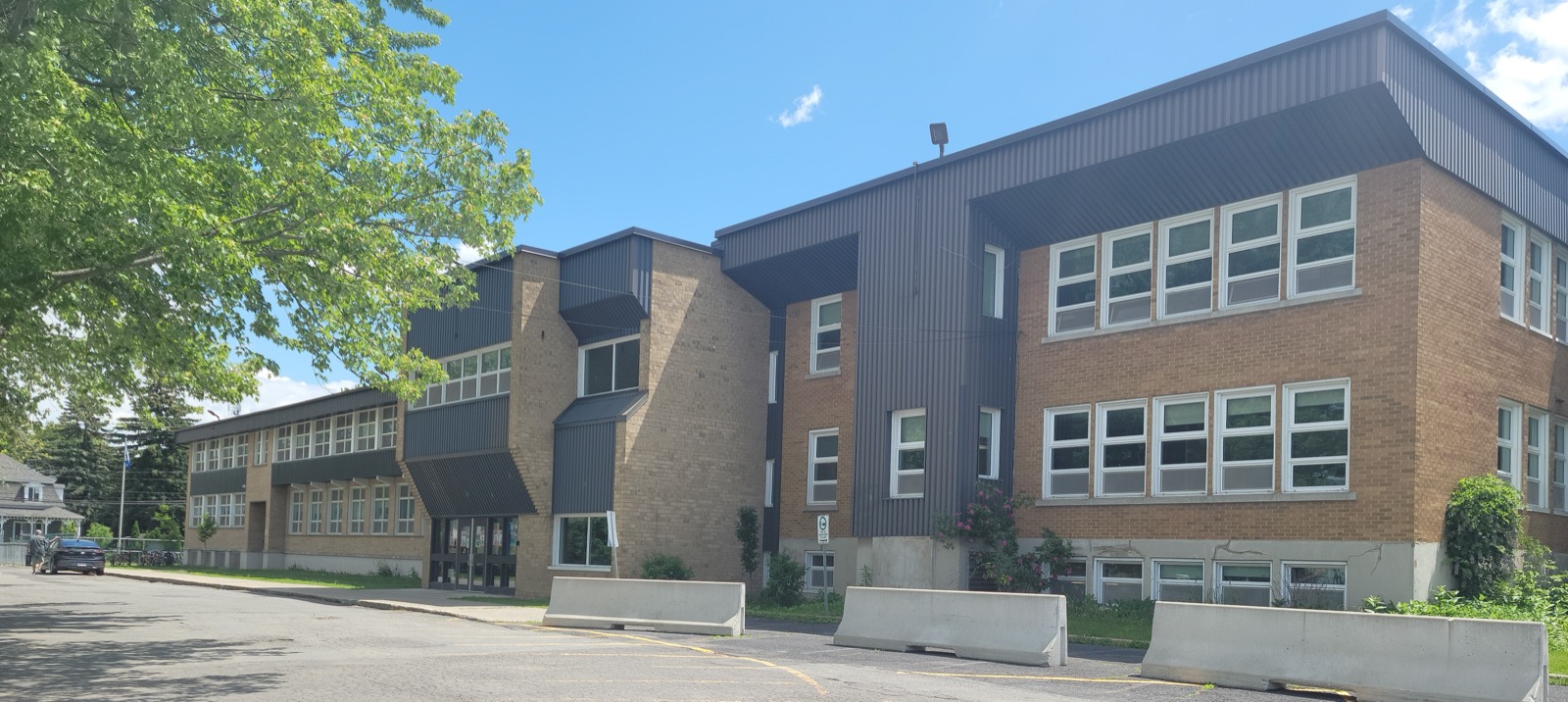
07 École de l'Amitié elementary school, behind the Saint-Jean-Baptiste town hall
Family life

École de l'Amitié, steps from the church

The village kids grow up at École de l'Amitié, the elementary school of the Centre de services scolaire des Patriotes, set up right behind town hall. Add a daycare centre, a library connected to the Réseau BIBLIO de la Montérégie and municipal recreation programs, and you have the essentials of a family life that plays out on foot in the core. For a village this size, that's far from a given.

Ask me about it: ask me why a school in the village changes everything for reselling a family home. Young buyers look at that before they even look at the kitchen.
08 The presbytery of the Saint-Jean-Baptiste-de-Rouville parish, archival photograph from BAnQ
History

The seigneur's first name

The village's full name is Saint-Jean-Baptiste-de-Rouville, a nod to the seigneury of Rouville, granted in 1694 to Jean-Baptiste Hertel de Rouville. The choice of patron saint for the parish, founded in 1797, also winks at the seigneur's first name. The old presbytery, photographed in the BAnQ archives, recalls the era when the whole territory was run from the village core.

Ask me about it: ask me what old property titles reveal in a seigneurial area. I still come across lots drawn back in the days of the original concession roads.
09
Sports and leisure

Thirteen parks and free skating rinks

For a village this size, the offer is surprising: the municipality maintains thirteen parks and green spaces, a bike path, a sliding hill and free outdoor skating rinks, with Parc des Loisirs on Gadbois Street as the families' headquarters. In winter, kids lace up their skates after school; in summer, the same park becomes the village playground.

Ask me about it: ask me which streets put Parc des Loisirs within walking distance. In a village core, that kind of proximity matters more than people think day to day.
10 Cultivated field and silos in front of Mont Saint-Hilaire, seen from Route 227 in Saint-Jean-Baptiste
The local market

A village market, not a suburban one

At the 2021 census, the municipality counted 3,179 residents, up 2.3% in five years, on 73 square kilometres of territory. The housing supply follows the same logic: a few village houses, hobby farms and concession-road properties, rarely several at once. Here you're not just buying a house, you're buying a landscape, and there are fewer keys available than people dreaming of one.

Ask me about it: ask me how to get ready for a market this thin. Financing lined up in advance and a targeted alert, otherwise the right property slips right past.
Let's talk

Thinking about buying or selling in Saint-Jean-Baptiste? Let's start talking.

A free evaluation of your property, a picture of the local market, or simply answers to your questions. No strings attached, and a straight answer.

Start my real estate project

Photo credits